
Warehouse cleaning
Warehouse Cleaning Sydney
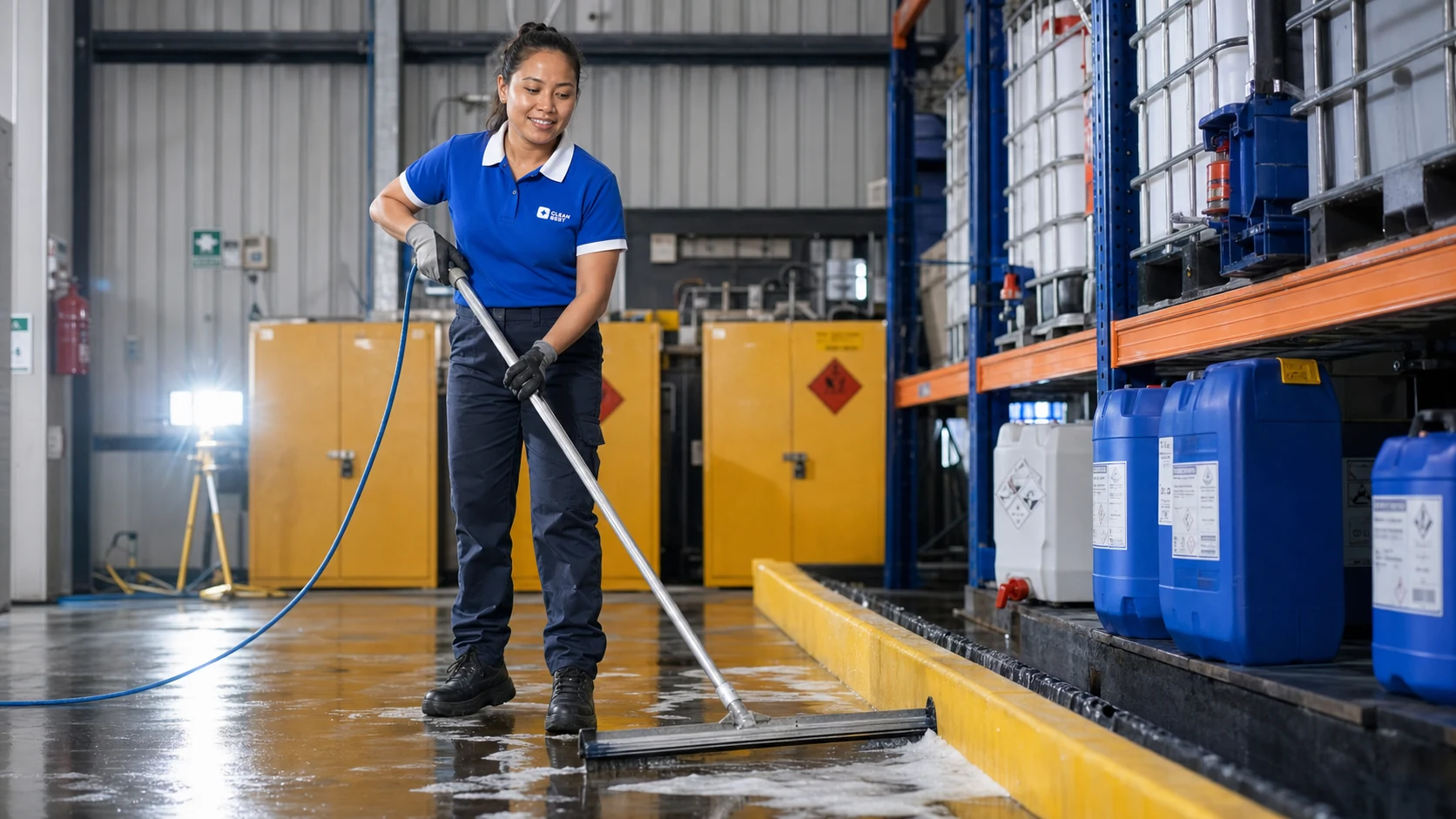
Machine-scrubbed slabs, racking dust rotated bay by bay, docks and aprons treated as the source of the dirt they are. Scheduled into the gaps in your dispatch pattern rather than dropped on top of it.
- Scrubbers, not mops — a slab is a different job, not a bigger one
- Line marking kept legible as a safety control
- Dock and apron scoped explicitly, not left out
- Cleaners inducted on your traffic management before night one
Ask us for the paperwork
Every claim on this card has a document behind it, and it reaches you before the first shift rather than after you chase it.
- $20m public liabilityCertificate of currency on request
- Police-checked cleanersWWCC-cleared for schools and childcare
- No lock-in agreementFixed written quote within 24 hours
What does warehouse cleaning in Sydney involve?
Warehouse cleaning covers the scheduled cleaning of industrial floor space and its supporting areas: machine scrubbing of the concrete slab, sweeping and dust control in aisles and under racking, dust removal from racking beams and upper levels, cleaning of loading docks and the external apron, and cleaning of the attached office, lunchroom and amenities.
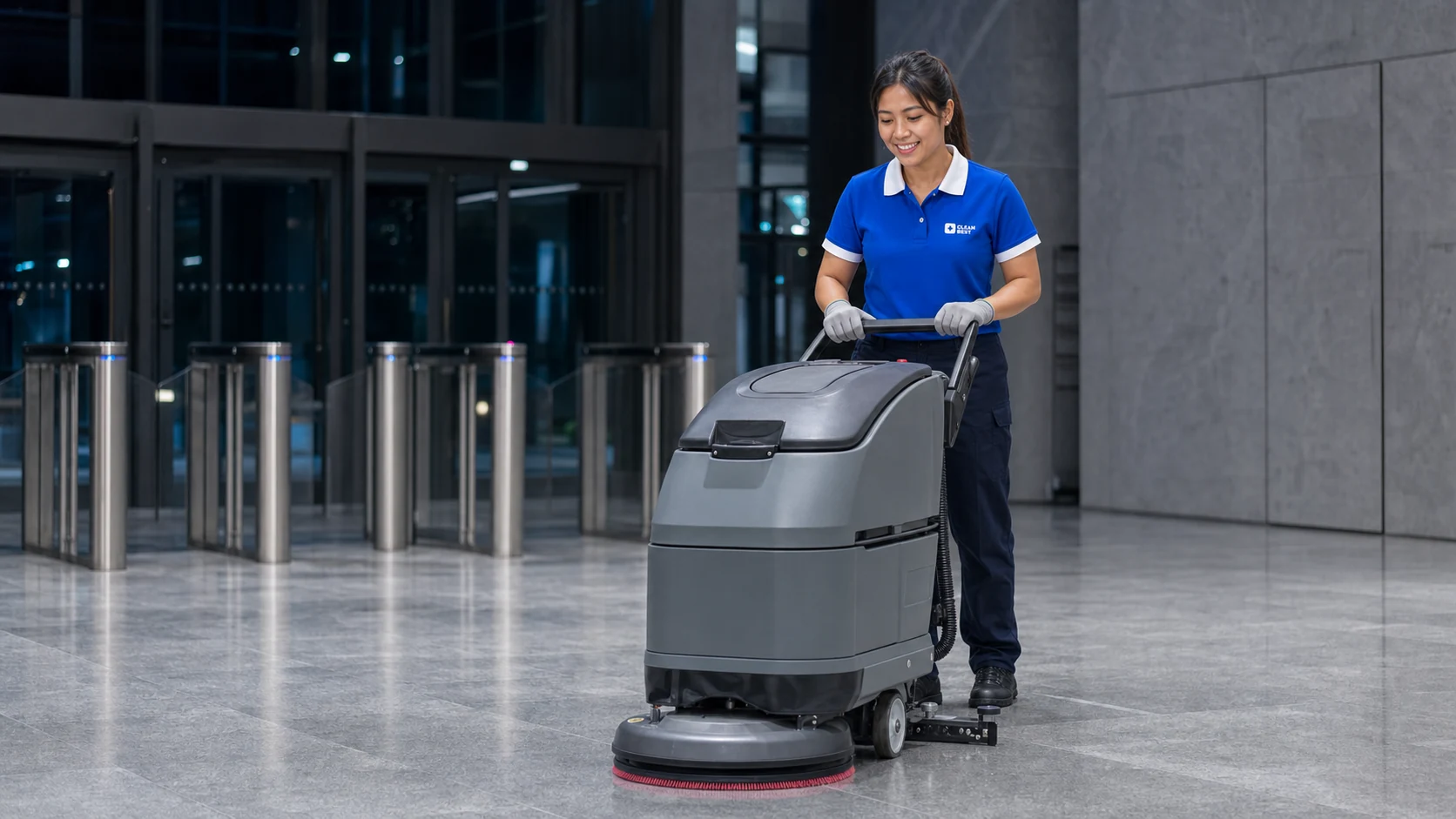
Warehouse floors are machine-scrubbed rather than mopped. A scrubber lays solution, agitates and recovers it in a single pass, which lifts fine tyre rubber and dust that mopping redistributes, and it is the practical way to keep painted line marking legible — a safety control rather than a cosmetic one. Work is normally scheduled around the site’s pick and dispatch pattern rather than to a fixed nightly window.
Clean Best cleans warehouses and distribution facilities across Sydney and has traded since 2015. Cleaners are inducted on the site’s traffic management plan before the first shift, the business carries $20m public liability cover, and quotes follow a free walkthrough. Warehouse quotes are arranged on 02 5839 3012 / 0485 000 860.
- Trading since 2015Cleaning Sydney business premises
- Police-checked cleanersWWCC where the premises requires one
- $20m public liabilityCertificate of currency on request
- Written quote in 24 hoursFixed price, no lock-in agreement
The detail
Warehouse cleaning Sydney operations can schedule around, not fight with
Warehouse cleaning Sydney sites need is usually quoted by somebody who has looked at a slab and multiplied. That is how you end up with a contract that assumes an empty building, collides with dispatch in the second week, and quietly degrades into a sweep of the main aisle and nothing else. A warehouse is not a very large office. It is a machine, and the cleaning has to fit inside the way the machine runs.
The floor is a machine job, and mopping it is not a cheaper option
A mop on an industrial slab does not clean it — it moves a film of fine tyre rubber and concrete dust from one place to another and leaves it to dry. A scrubber lays solution, agitates it, and recovers it in one pass, which is the only method that actually removes what is on the floor rather than rearranging it. On a large slab it is also the only method that finishes inside the window you have.
There is a safety argument as well as a cosmetic one. Painted line marking — aisles, pedestrian walkways, exclusion zones, rack legs — is a control that only works while people can see it. Fine rubber dust greys it out steadily, and a slab that has not been machine-scrubbed for a year has faded marking that everybody has stopped registering. Keeping the marking legible is part of what the scrub is for.
Racking dust falls, which is why cleaning only the floor never lasts
Dust settles on beams, on the tops of pallets, on the upper levels of the racking, and it does not stay there. It migrates back down onto stock and onto the slab you scrubbed last week, which is why a warehouse cleaned only at ground level always looks like it needs cleaning again. Racking has to be on a rotation — bay by bay, level by level, with the areas recorded so the rotation is auditable and nothing is quietly skipped for a year.
Anything above safe reach needs the right access equipment and the right controls. It is scoped, scheduled and priced on purpose. A contractor improvising height work from a pallet is a contractor who is going to have an incident on your site, and it will be your site it happens on.
The dock and the apron are where the dirt comes from
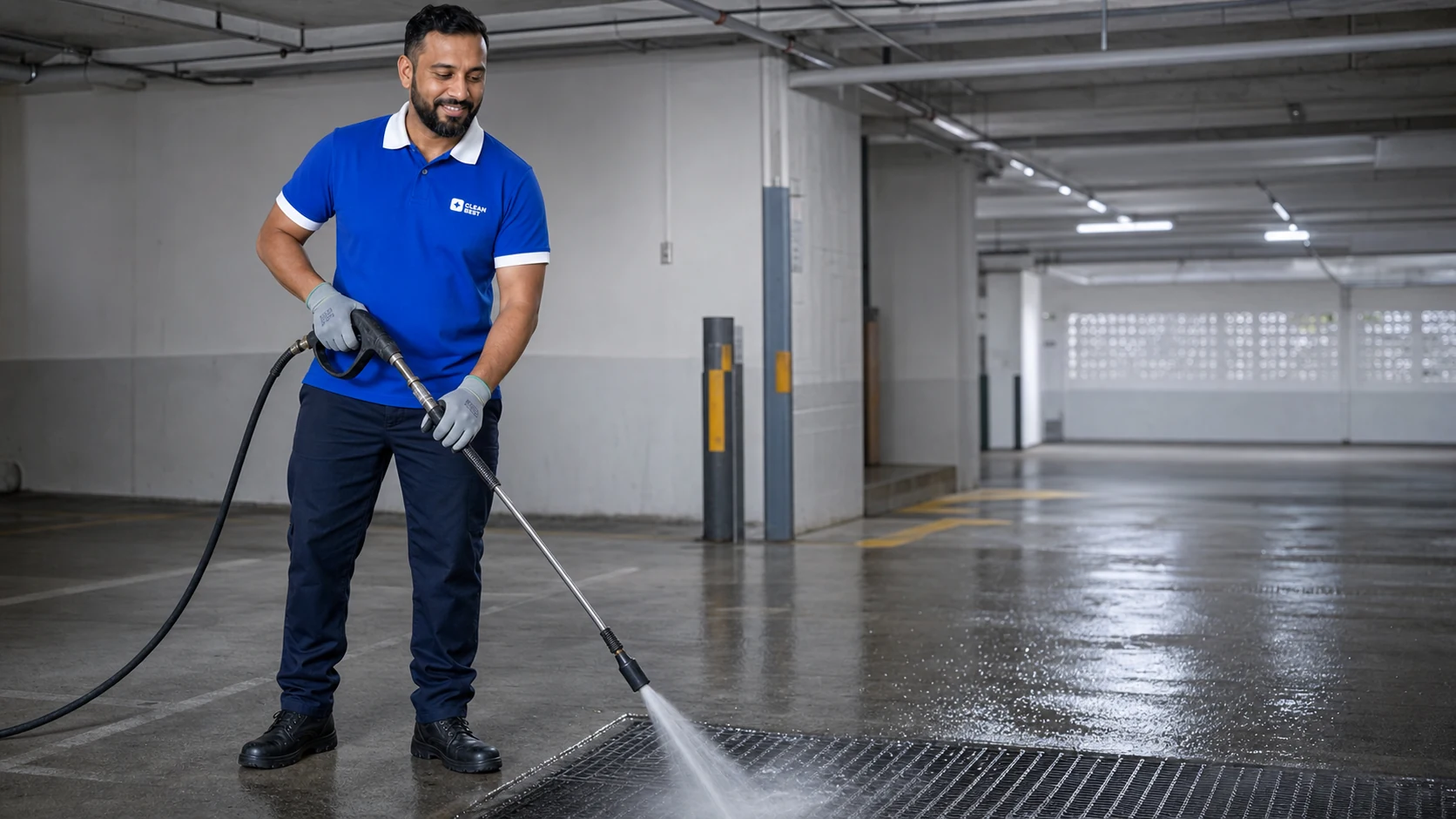
Most warehouse contracts stop at the roller door, and it is the most expensive omission in the whole scope. The dock and the external apron are the doorway through which everything arrives: tyre rubber, grit, spilled product, packaging debris, oil, water in the wet. Clean the slab and ignore the apron and you are simply cleaning the same dirt twice — once inside, then again next week when it walks and drives back in.
Put the dock and the apron in the scope on a real cycle and the internal result holds for longer at lower cost. It is one of the few genuinely free wins in this trade, and it exists mainly because nobody thinks to ask for it.
Scheduling around dispatch, not on top of it
A cleaning schedule that ignores your pick and dispatch pattern will lose the argument with it, every time, and what you will get instead is whatever the cleaner could reach. So we ask when the aisles are genuinely free: the gap between the last outbound and the first inbound, a weekend window, or an aisle-by-aisle approach during a quiet shift with the area coned and traffic diverted. Then we build the scrub cycle into that reality rather than against it.
Safety is the first line of the induction, not the last
The dominant risk on a working warehouse is not the chemical, it is a person on foot in a forklift aisle. So the induction starts with your traffic management plan, your exclusion zones and your site rules, and it happens before the first shift rather than after the first near miss. Wet areas are marked and coned, egress paths stay clear, and safe work method statements for higher-risk tasks are supplied on request.
And the office, the lunchroom and the amenities sit on the same agreement, running an office-style round on their own cycle. One scope, one supervisor, one invoice — because splitting a warehouse between two contractors buys you two inductions, two sets of paperwork and a permanent argument about the corridor in between.
Call 02 5839 3012 / 0485 000 860 and we will walk the site in the gap, when the aisles are clear and the floor looks like the floor we would be cleaning.
Line marking
A control that only works while people can still see it
Aisle markings, pedestrian walkways, exclusion zones and rack-leg lines are safety controls, and a control nobody can see is not a control. Fine tyre rubber and concrete dust grey them out steadily and quietly, and after a year of no machine work the marking has faded to the point where everybody has stopped registering it.
That is not a cosmetic problem with a cosmetic fix. Keeping the marking legible is part of what the scrub cycle is for, and it belongs in the scope with a stated frequency — not left to a contractor's discretion, where it will be the first thing to go when the hours run short.
- Machine scrubbing on a stated cycle, not when someone remembers
- Aisles, walkways and exclusion zones kept legible
- Wet areas marked and coned; egress paths kept clear
- Cleaners inducted on your traffic management plan individually
What's included
What we clean on a Sydney warehouse site
The shape of a working industrial scope. Yours is written from a walkthrough taken in the gap in your dispatch pattern.
- Concrete slab machine-scrubbed on a stated cycle across the reachable floor area
- Aisles, pedestrian walkways and exclusion-zone line marking kept legible
- Aisles and under-racking areas swept and dust-controlled between scrub cycles
- Racking beams and upper levels dusted on a recorded bay-by-bay rotation
- Loading docks swept, scrubbed and cleared of packaging debris and spilled product
- External apron treated on a cycle, because it is where the dirt originates
- Roller door tracks, thresholds and bollards cleaned of built-up grit
- Spill response to your site procedure, with the area marked and coned
- Front office cleaned on an office-style round — desks, waste, floors, glass
- Lunchroom benchtops, sinks, tapware, microwave interiors and fridge exteriors
- Amenities and change rooms sanitised; paper, soap and hand towel restocked
- Waste and recycling consolidated to your bin area, cages and stillages included
- Touchpoints disinfected — door furniture, handrails, switch panels, timeclocks
- Site secured on exit to your procedure; entry and exit logged
Excluded and quoted separately: work above safe reach without the correct access equipment, licensed trade work, hazardous or regulated waste, and anything requiring plant we have not been asked to bring.
Pricing
Warehouse cleaning quotes, built from the slab and the shift pattern
Priced from reachable floor area, racking height, dock count and — decisively — where the genuine gaps in your dispatch pattern are. The figure is fixed in writing before the first visit.
Single-bay unit
A compact industrial unit with a small slab, one roller door, a front office and a lunchroom.
- Slab machine-scrubbed on a stated cycle rather than mopped
- Dock and apron swept and treated, not left out of the scope
- Office and amenities on their own office-style round
- Waste and packaging debris handled on every visit
Fixed price, in writing, before the first visit.
Distribution warehouse
A working pick-and-dispatch facility with racking, multiple docks, marked traffic aisles and shift patterns to schedule around.
- Scrubbing scheduled into the gaps in your dispatch pattern
- Racking dust rotated bay by bay, with proper access equipment
- Line marking kept legible as a safety control, not a cosmetic one
- Cleaners inducted on your traffic management plan before night one
Fixed price, in writing, before the first visit.
Multi-site industrial
Several Sydney facilities under one operations or property budget — depots, stores, cross-docks, mixed light industrial.
- One written scope per facility, one supervisor across all of them
- Periodic programs sequenced site by site so nothing falls out of rotation
- A site register recording what was done, where and when
- One consolidated invoice instead of a contractor per postcode
Fixed price, in writing, before the first visit.
Free walkthrough, then a written scope and a fixed price within 24 hours.
How it works
How we take over a warehouse clean
Four steps, all of them shaped around the fact that the site has to keep running.
- 1
Tell us how the site runs
Call 02 5839 3012 with the slab size, the racking, the dock count, the shift pattern and when the floor is genuinely free of traffic.
- 2
We walk it in the gap
A walkthrough during dispatch shows you a warehouse nobody can clean. We come when the aisles are clear, which is when we would be working.
- 3
Scope, cycles, then price
Scrub cycles, racking rotation, dock and apron, office and amenities — each with a stated frequency. The fixed figure comes after.
- 4
Induct and start
Cleaners inducted on your traffic management and site rules, then the schedule runs. A supervisor audits monthly against the scope.
FAQ
Warehouse cleaning questions from Sydney operations teams
Scheduling, machine work, racking, docks, amenities and site safety.
When can a working Sydney warehouse actually be cleaned?
Clean Best schedules warehouse cleaning around dispatch rather than around the clock. In practice that means the gaps: between the last outbound run and the first inbound, over a weekend, or aisle by aisle during a quiet shift with the area coned and the forklift traffic diverted. A contractor who proposes a fixed nightly window without asking about your pick and dispatch pattern has not understood how the site works, and their schedule will collide with yours in week two.
Why does warehouse floor cleaning need a machine?
Clean Best uses ride-on and walk-behind scrubbers on warehouse floors because mopping a slab of that size is not a smaller version of the same job, it is a different job that does not work. A scrubber lays solution, agitates and recovers it in one pass, which lifts the fine tyre rubber and dust that a mop simply redistributes. It is also the only realistic way to keep line marking legible, and legible line marking is a safety control rather than a cosmetic one.
What happens to dust on the racking?
Clean Best treats racking dust as a scheduled rotation, bay by bay, rather than a task somebody gets to eventually. Dust on beams and upper levels migrates back down onto stock and onto the floor you just scrubbed, so cleaning the slab while ignoring the racking is a short-lived result. Work above safe reach needs the right access equipment and the right controls, so it is scoped, scheduled and priced deliberately — never improvised on a pallet.
Do you clean the loading dock and the apron outside it?
Clean Best scopes the dock and the external apron explicitly, because they are the doorway through which everything else gets dirty. Tyre rubber, spilled product, packaging debris, oil and the grit that walks and drives in from outside all originate there. Sweep and scrub the dock and the apron on a real cycle and the internal floor stays cleaner for longer with less work. Leave them out of the scope, as most contracts do, and you are cleaning the same dirt twice.
Can you clean the warehouse office and amenities too?
Clean Best cleans the front office, the lunchroom and the amenities on the same agreement as the warehouse floor, and it is usually the sensible arrangement. They run on different cycles — the office on an office schedule, the slab on a machine cycle — but under one scope, one supervisor and one invoice. Splitting a warehouse between two contractors means two site inductions, two sets of paperwork and a reliable argument about who owns the corridor between them.
What are the safety requirements for cleaning a Sydney warehouse?
Clean Best inducts every cleaner on the site's traffic management before their first shift, because a cleaner on foot in a forklift aisle is the risk that matters most in this environment. We work to your site rules, mark and cone wet areas, keep egress paths clear, and provide safe work method statements for higher-risk tasks on request. Any contractor who does not ask about your traffic management plan before quoting has told you something important about how they will operate.
Keep exploring
What industrial sites usually add
All on one scope, one supervisor and one invoice.
Get warehouse cleaning Sydney dispatch teams can actually schedule around
Free walkthrough in your quiet window. Scrub cycles and racking rotation in writing, then the fixed price. Call 02 5839 3012 / 0485 000 860.