
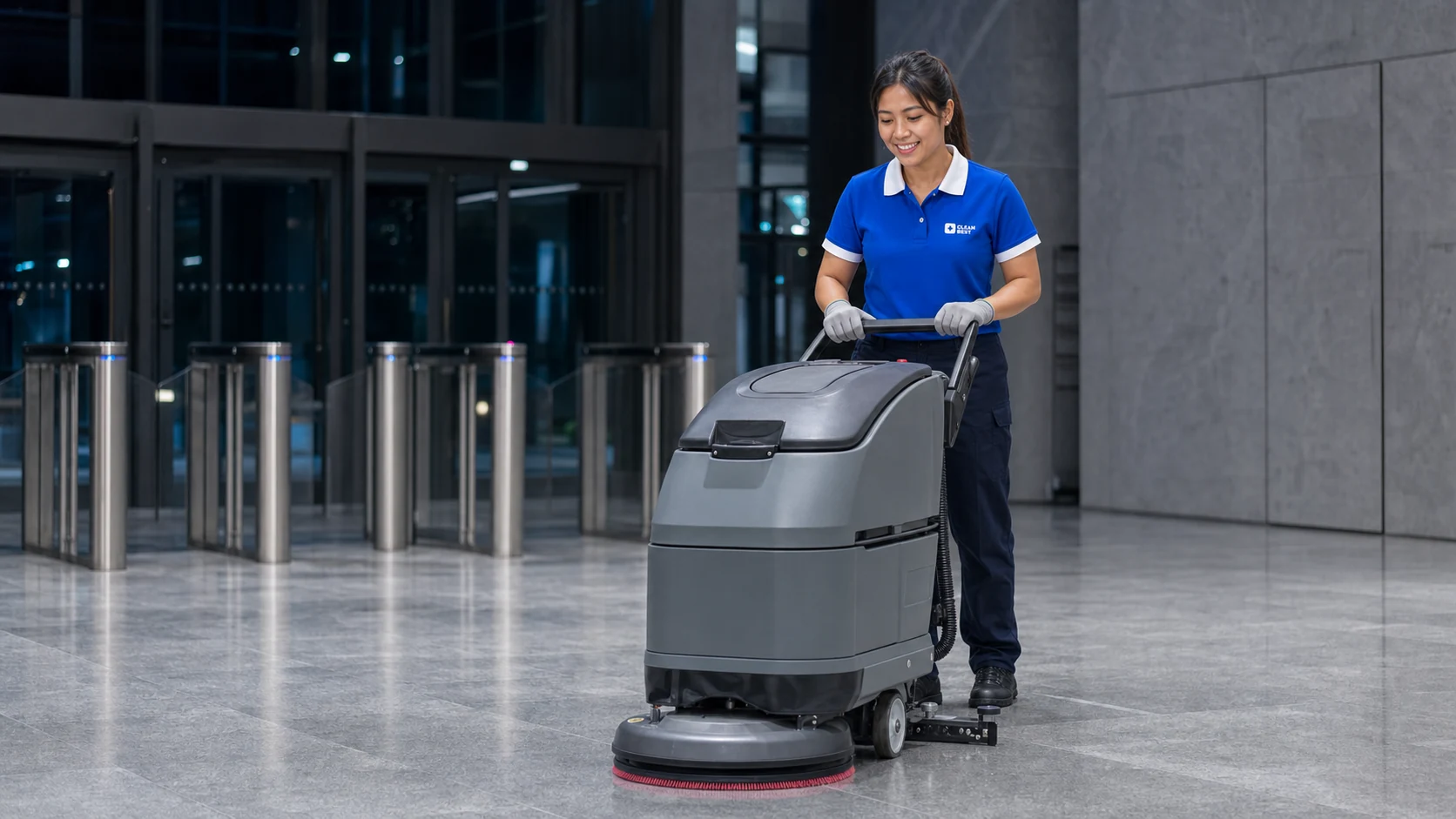
Commercial cleaning across Sydney
Commercial Cleaning Sydney
Most commercial cleaning goes wrong at the quote, not at the mop. This page is about the part nobody explains: how the work is scoped, why two prices for the same building differ so much, and what to demand in writing before you sign anything — including with us.
- The written scope reaches you before the price does
- The labour hours behind the figure are named, not hidden
- Police-checked cleaners, $20m public liability, evidence supplied
- Rolling agreement, 30 days notice, no lock-in term
Sydney-wide coverage, rostered out of 54 Columbia Rd, Seven Hills NSW 2147.
Four things you can audit
Not adjectives. Each line below is a document, a clearance or a number you can ask us to produce before you commit to anything.
- $20m public liabilityCertificate of currency, sent on request
- Police-checked cleanersClearance details before the first shift
- Trading since 2015ABN 84 700 040 553, checkable on the ABR
- A written scope of worksWritten quote in 24 hours
How do you choose a commercial cleaning company in Sydney?
The largest variable in a Sydney commercial cleaning quote is not the hourly rate. It is the number of labour hours the contractor has assumed the job needs. Two quotes for the same premises, carrying the same task list, can be built on very different hour counts, and neither document usually says so. Asking each contractor how many hours per visit their price funds, and how they reached that number, separates the quotes faster than any other single question.
The second variable is who physically attends. A significant share of commercial cleaning work in Sydney is passed from the contracting company to an operator, and sometimes on again. Every link takes a margin out of the same fixed price, so the hours available for the premises fall at each step while the client keeps paying the original figure.
Clean Best is a commercial cleaning company operating across Sydney and has traded since 2015 from 54 Columbia Rd, Seven Hills NSW 2147. It issues the written scope of works before the price, states the labour hours behind the figure, carries $20m public liability cover, and works on a rolling agreement with 30 days notice and no lock-in term. Quotes are arranged on 02 5839 3012 / 0485 000 860.
- Trading since 2015Cleaning Sydney business premises
- Police-checked cleanersWWCC where the premises requires one
- $20m public liabilityCertificate of currency on request
- Written quote in 24 hoursFixed price, no lock-in agreement
The buying decision
How to buy commercial cleaning in Sydney and get the clean you paid for
Commercial cleaning Sydney businesses buy is one of the few services where the buyer almost never sees the product before they own it. You sign in daylight. The work happens at 9pm. By the time the gap between what was promised and what is delivered becomes obvious, eight months have gone past and the person who signed has moved on. That asymmetry is the whole problem, and everything below is written to close it.
What follows is not a sales page. It is the arithmetic and the paperwork — the things a contractor would rather explain after you have signed, if at all. If you read it and go and hire a competitor with better answers than ours, that is a fine outcome. Bad cleaning contracts poison the market for everybody who does this properly.
Nearly all of the price is hours, and nearly nobody tells you
Strip a commercial cleaning quote back and it is labour. Wages, then superannuation, workers compensation, public liability cover, equipment and its maintenance, consumables, vehicles, travel across a city the size of Sydney, and supervision. Chemical is a rounding error. So when two contractors quote the same premises and one figure is materially lower, the difference is very rarely a leaner cost base. It is that they have assumed fewer hours on your floor.
The uncomfortable part is that both quotes may carry an identical task list. Same washrooms, same kitchen, same vacuuming. One contractor has priced ninety minutes to do it and the other has priced three hours. Neither document mentions hours at all, so the client compares the only two numbers on the page — the price and the task list — and concludes, reasonably, that they are being offered the same thing cheaper.
They are not. They are being offered the same list, performed in less than half the time, which in practice means a subset of the list performed and the rest quietly dropped in the order of what nobody notices first. Vents. Skirtings. Under the desks. The shower drain. Then, eventually, the things people do notice.
So ask the question directly, of every contractor, in the meeting: how many labour hours per visit does this price fund, and how did you arrive at that number?A contractor who has walked the site and built the scope from it answers without pausing. A contractor who has priced from a floor plan and a hopeful assumption will reach for a phrase like “as long as it takes”. That is your answer.
Then check whether the money can actually pay for those hours
Once you have the hours, the sanity check is simple and you can do it yourself in a minute. Cleaning in Australia is award-covered work. A contractor must fund the wage for the hours they have promised, plus superannuation on top, plus workers compensation, plus the insurances, plus equipment and consumables, plus travel and supervision — before a cent of margin exists. There is no clever operating model that removes those costs. There is only pretending they are not there.
If the arithmetic does not close, one of three things is going to happen on your site, and none of them is a moral failing so much as a mathematical certainty: the hours shrink to what the money can buy, the people are paid less than they should be, or the contractor loses money and leaves. All three are your problem, because all three end with an unstaffed site and a new tender.
This is the single strongest argument against simply accepting the lowest quote in the inbox. Not that cheap is bad — cheap can be excellent, if it comes from good routing and low overheads — but that a price which cannot fund its own scope has already told you what it is going to do.
Who is actually going to be in your building?
Ask whether the cleaner attending your premises is on the contractor’s payroll or on somebody else’s. A large amount of commercial cleaning in Sydney is passed from the company that signed the agreement to an operator who runs the round, and occasionally on again from there. Each link in that chain takes a margin out of the same fixed price you agreed. The money at the end — the money that buys hours on your floor — is what is left.
There is nothing unlawful about subcontracting and some subcontracted crews are excellent. The problem is being unable to find out. You cannot audit a chain you were never told about, you cannot verify a police check on a person whose employer you cannot name, and when something goes wrong at 6am, accountability dissolves at whichever link finds it convenient. Ask the question, ask it before you sign, and write the answer into the agreement.
After-hours access is a project, not a footnote
Most commercial premises in Sydney are cleaned when they are empty, and in a managed building that means access is the first thing to go wrong. An after-hours pass or fob has to be issued through building management, and that has a lead time. An induction usually has to be completed and held on file. Anything bulky — a scrubber, a carpet extractor, pallets of consumables — needs a loading dock and goods lift booking, which in many Sydney towers is a form and a window rather than a phone call.
If the work runs late the air conditioning may need an out-of-hours request, which someone has to raise and someone has to pay for. If a security patrol attends, it needs to know who is on the floor. Some buildings require the contractor’s certificate of currency lodged with them directly, not merely with you. Each of those is a lead time, and a contractor who has not asked you about any of them has not thought about your first week — which is a reasonable proxy for how much thought they have given the other fifty-one.
The scope of works is the contract. The price is just a number on it
Everything above converges here. The scope of works is the only document that can be enforced, and most of the ones we see cannot be. “Clean washrooms weekly” is not a specification: clean how, to what standard, restocked with whose stock, and what happens if the paper runs out on Friday afternoon. “General cleaning of all areas” means nothing at all — it is a phrase that exists to be un-failable.
A scope you can enforce names the areas, states a task and a frequency for each, specifies the method or the product wherever it changes the outcome, says who supplies consumables, states the access arrangement, lists the periodic work and its cycle, sets out the exclusions plainly, and — the clause everyone forgets — says what happens when something is missed. The table below is what that looks like side by side.
Clean Best works this way because it is the only way that survives contact with month nine. We issue the scope before the price, we tell you the hours behind the figure, a named supervisor walks the premises monthly against that scope and sends you the result whether it flatters us or not, and the agreement rolls on 30 days notice so that we have to keep earning it. For the full brand picture — every service, every location, the whole company — Clean Best Group is the place to look.
If you want the site walked, call 02 5839 3012 / 0485 000 860. We will come after hours, we will tell you what the premises actually needs rather than what is easy to sell, and if your current contractor is doing a good job we will say so and leave you alone.
Scope of works
What a commercial cleaning scope of works has to specify
Nine elements. The middle column is the wording that lets a contractor off the hook; the right column is the wording that does not. Use it on us as readily as on anyone else.
| What must be specified | Wording you cannot enforce | Wording you can |
|---|---|---|
| Areas | “The premises”, or a floor number with nothing under it. | Every area named separately: reception, open plan, meeting rooms, kitchen, washrooms by level, fire stairs, lift lobbies, loading dock, external entry. Anything unnamed is unpriced, and therefore uncleaned. |
| Tasks | “General cleaning of all areas.” | A verb and an object per area. Not “clean the kitchen” but “benchtops, sinks, tapware, splashback and microwave interiors cleaned and disinfected; fridge exterior wiped; bins emptied and relined”. |
| Frequency | “As required”, or “regularly”. | A stated cycle against each task: every visit, weekly, monthly, quarterly, annually. “As required” means required by whom, and the answer in practice is nobody. |
| Method or product | “Appropriate products will be used.” | Named where it changes the outcome: neutral pH on sealed timber, colour-coded cloths in clinical rooms, low-tox in childcare, the disinfectant's stated contact time actually observed on touchpoints. |
| Consumables | Not mentioned at all — the most common gap of the lot. | Who supplies paper, soap, hand towel and bin liners; who monitors the stock level; who is at fault when a washroom runs out at 4pm on a Friday. Put a name against it. |
| Access and hours | “After hours.” | The window, the entry method, who issues the pass, who is notified, whether the alarm is set on exit, and what happens to the visit if the cleaner cannot get in. |
| Periodic work | “Deep cleans available on request.” | Carpet extraction, hard-floor treatment, high dusting and external glass listed with a cycle and stated as either inside the price or quoted separately. Silence here means it never happens. |
| Exclusions | Absent, so every disagreement becomes an argument. | Written down plainly: heavy furniture, personal belongings, paperwork on desks, biological spills, anything above safe reach. A good exclusion list protects you as much as the contractor. |
| Failure and remedy | “We pride ourselves on quality.” | What you do when something is missed, how fast it is put right, who you call, and whether it costs you anything. If a remedy is not written, you do not have one. |
A scope that specifies all nine is harder to write and harder to hide behind. That is the point of it. If a contractor resists putting this level of detail on paper, you have learned something valuable at no cost.
Before you sign
Eight things to have in your hand before you sign
In this order. The first four are evidence, the next two are arithmetic, the last two are what happens when it goes wrong — which is the part nobody asks about until it has.
Certificate of currency for public liability
Not a policy number in an email — the actual certificate, in date, with the insured entity's name matching the entity on your quote. If those two names differ, ask why before anything else. Many Sydney building managers require a copy lodged with them as well as with you.
Workers compensation cover
Someone is going to be alone in your building at 10pm on a wet floor. If they are not covered, the exposure has a way of finding its way back to the occupier. Ask for the evidence, and ask whether it covers everyone who will actually attend, not just the office staff.
Police check clearances for the people attending
Ask for the clearance status of the cleaner rostered to your site, not a general statement that the company screens people. Premises used by children also need a NSW Working with Children Check, and a centre director or principal can verify that clearance directly.
A straight answer on subcontracting
Ask: is the person attending my site on your payroll, or on someone else's? If the run is sold down a chain, every link takes a margin out of the same price and the hours on your floor fall accordingly. There is nothing illegal about it. There is a great deal wrong with not being told.
The labour hours behind the price
The single most useful question in the meeting, and the one contractors least expect. How many hours per visit does this price fund, and how did you get to that number? A contractor who has scoped the site properly answers immediately. One who has guessed will change the subject.
The written scope of works, before the price
Ask to see the task list and its frequencies before you are shown a figure. If the scope arrives after the number, the number came first and the scope was reverse-engineered to fit it. That is the wrong way round, and it is where under-delivery is born.
The audit format and the escalation path
Who inspects, how often, against what document, and does the result reach you. Then: who do you call at 7am when the boardroom was not touched, and is it a person or a ticket queue. Get the name and the mobile number written into the agreement.
The exit terms, read before the entry terms
How much notice, what it costs, who returns the keys and passes, and whether there is an early-termination charge buried in a clause. Read the exit before the entry. The ease of leaving is the truest single indicator of how you will be treated while you stay.
Clean Best supplies every item on this list without being chased, and the exit terms are on the /terms page rather than buried in a quote. If another contractor supplies them faster, hire them — a buyer who asks these questions gets a better clean from whoever wins.
After hours
The building lets us in, or the clean does not happen
The first fortnight of a new cleaning arrangement is almost never lost on the cleaning. It is lost on access. The pass was not issued, the induction was not lodged, the dock was not booked, the alarm code changed and nobody said. So we treat the access procedure as a deliverable with a date on it, not a detail to be sorted out on the night.
Before the first shift we write down exactly how your cleaner enters and secures the premises — the pass or fob and who issues it, the induction and where it is filed, the dock and goods lift booking process, the alarm sequence, who the security patrol should expect to find on the floor. Each cleaner is inducted on that procedure individually, and entries and exits are logged.
- Access documented and agreed with building management before night one
- Each cleaner inducted individually, not briefed by group email
- Dock and goods lift bookings raised for equipment, not improvised
- Certificates lodged with the building as well as with you
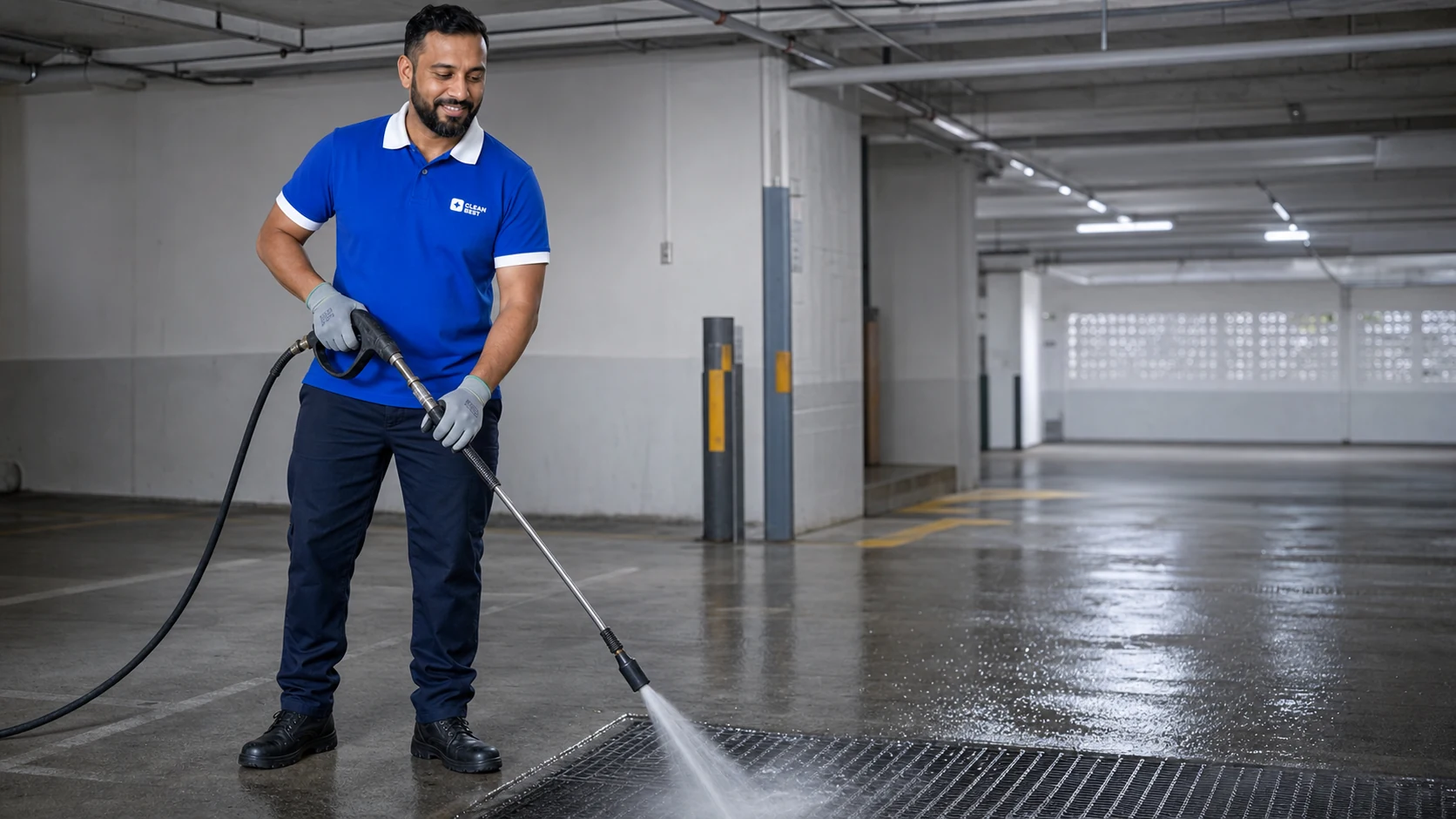
What's included
What a Clean Best commercial clean covers on a Sydney site
This is the shape of a regular scope. Yours is written from your premises at the walkthrough — this list exists so you can see the level of specificity we mean when we say 'written scope'.
- Waste and recycling emptied, liners replaced, waste carried to the building bin room or kerb
- Washroom pans, urinals, basins, tapware and partitions sanitised; paper, soap and hand towel restocked
- Kitchen benchtops, sinks, tapware, splashbacks and microwave interiors cleaned and disinfected; fridge exteriors wiped
- Touchpoints disinfected with the product's stated contact time actually observed, not sprayed and wiped straight off
- Carpet vacuumed under and behind furniture and along skirting lines, not only down the traffic lanes
- Hard floors mopped with the correct chemistry for the surface — sealed timber, vinyl, tile or sealed concrete each need a different one
- Entry glass, internal glazing and partition panels spot-cleaned to remove marks and prints
- Reception detailed: counter, entry mats, visitor seating and the surfaces a guest actually touches
- Meeting rooms reset — tables, chair bases, whiteboards, AV remotes and cabling tidied
- Horizontal surfaces, shelving, ledges, cable trays and monitor stands dusted on the agreed rotation
- High-level dusting of vents, light fittings, ceiling corners and the tops of partitions, rotated through the quarter
- Periodic programs scheduled and costed: carpet extraction, hard-floor stripping and sealing, external glass
- Consumables monitored and flagged before they run out, rather than after somebody reports it
- Premises secured on exit — lights off, doors locked, alarm set, entry and exit logged
Trade waste removal, work above safe reach, biological spills and anything requiring a licensed trade are excluded and quoted separately. An exclusion list this plain protects you as much as it protects us.
Pricing
Commercial cleaning quotes, built from hours rather than a rate card
There is no honest per-square-metre rate for commercial cleaning, and anyone publishing one is guessing at your amenities. We count what is there, work out the hours the scope needs, and fix the figure in writing before the first visit. No dollar amount appears on this website for the same reason.
Standalone premises
You control the front door and the amenities — a suite, a shopfront, a clinic, a studio, a freestanding unit anywhere in Sydney.
- One to three rostered visits a week, outside your trading hours
- Waste, amenities, kitchen, floors and entry glass every visit
- One cleaner who keeps the site rather than a nightly stranger
- Consumables handed to us, or left with the supplier you already use
Fixed price, in writing, before the first visit.
Tenancy in a managed building
Base building rules apply: after-hours passes, dock and goods lift bookings, a security patrol, a building manager who wants your contractor's paperwork.
- Access and inductions arranged with building management before night one
- Periodic work costed into the schedule rather than bolted on later
- Named supervisor with a mobile number and a written monthly audit
- Insurance certificates lodged with the building as well as with you
Fixed price, in writing, before the first visit.
Sydney-wide portfolio
Several premises under one budget holder — branches, clinics, centres, depots, or a mixed property portfolio spread across the metropolitan area.
- A separate written scope per site, one supervisor accountable across all of them
- A site register recording what was done, where and when
- One consolidated monthly invoice instead of chasing separate contractors
- Periodic programs sequenced site by site so nothing falls out of the rotation
Fixed price, in writing, before the first visit.
Free walkthrough, then a written scope and a fixed price within 24 hours.
How it works
From the first call to the first clean
Four steps. Note the order of step three — the scope reaches you before the number, because a number written first will always find a scope to fit it.
- 1
Tell us what the premises is
Call 02 5839 3012. We want the building type, the floor surfaces, the amenity count, and the hour at which the building will actually let a cleaner in.
- 2
We walk it at cleaning time
After close, bins full, floors used, lights as they will be. A walkthrough at 11am shows you a building nobody is going to clean.
- 3
Scope first, then the price
You receive the task list with its frequencies, and the fixed figure underneath it. In that order, deliberately — so you can see what the money buys.
- 4
Your cleaner starts and stays
Inducted on your access procedure, police-checked before the first shift, and audited monthly against the scope you signed. Same person each visit.
Why Clean Best
Six things that separate a real contractor from a cheap quote
None of these are clever. All of them are the things that quietly disappear when a cleaning contract has been priced below the hours it needs.
The scope comes before the price
You are shown the task list and its frequencies first, and the figure second. A contractor who leads with the number is asking you to buy an amount of money rather than an amount of work.
The hours behind the number are named
Ask us how many labour hours a visit buys and how we got there, and we will tell you. A price that cannot fund the hours it promises will be delivered in the hours it can fund.
Employed and rostered, not passed down a chain
Your cleaner is the same person each visit and they are on our roster. Work handed down a subcontracting chain arrives with nobody accountable for the standard at the end of it.
$20m public liability cover, evidenced
Public liability cover and workers compensation for everyone rostered, with the certificate of currency sent to you or straight to building management before we set foot on site.
A monthly audit you actually receive
A named supervisor walks your premises each month against the scope you signed and sends you the result — whether it is good news or not. Anything below standard is corrected free.
Nothing you cannot leave
A rolling agreement with 30 days notice either way. A contractor who has to earn the next month is a contractor who is still cleaning properly in the ninth one.
What we clean
Twelve premises types, one way of scoping them
Every one of these is scoped, priced and audited the same way — the difference is what the room needs, not how the contract is written.
- Commercial Cleaning Services SydneyA written scope, a set frequency and a named supervisor behind every commercial premises we take on anywhere in Sydney.See how we scope commercial cleaning
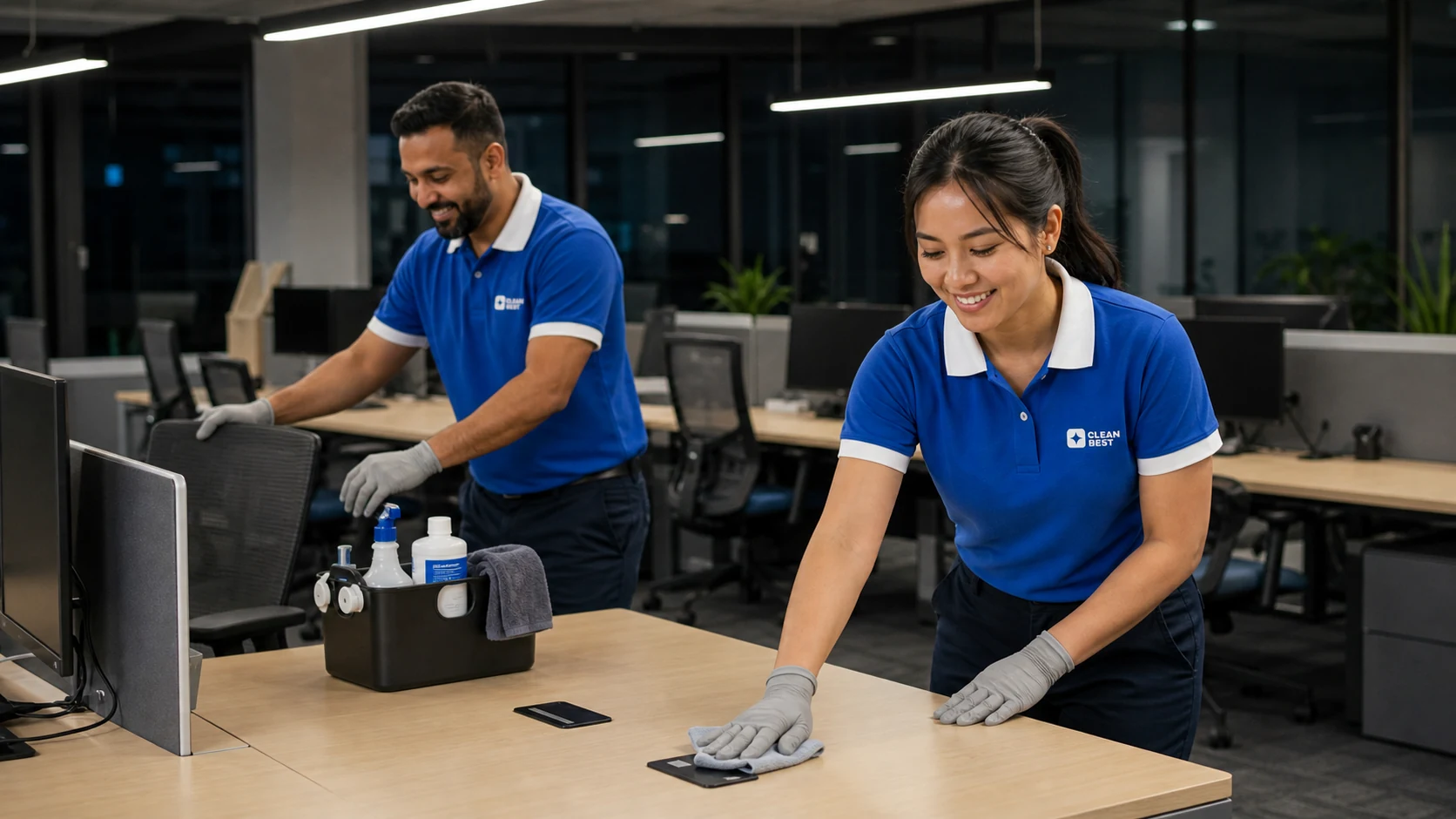 Office Cleaning SydneyEvening and overnight office rounds built around headcount and kitchen load rather than a square-metre rate card.See how we scope office cleaning
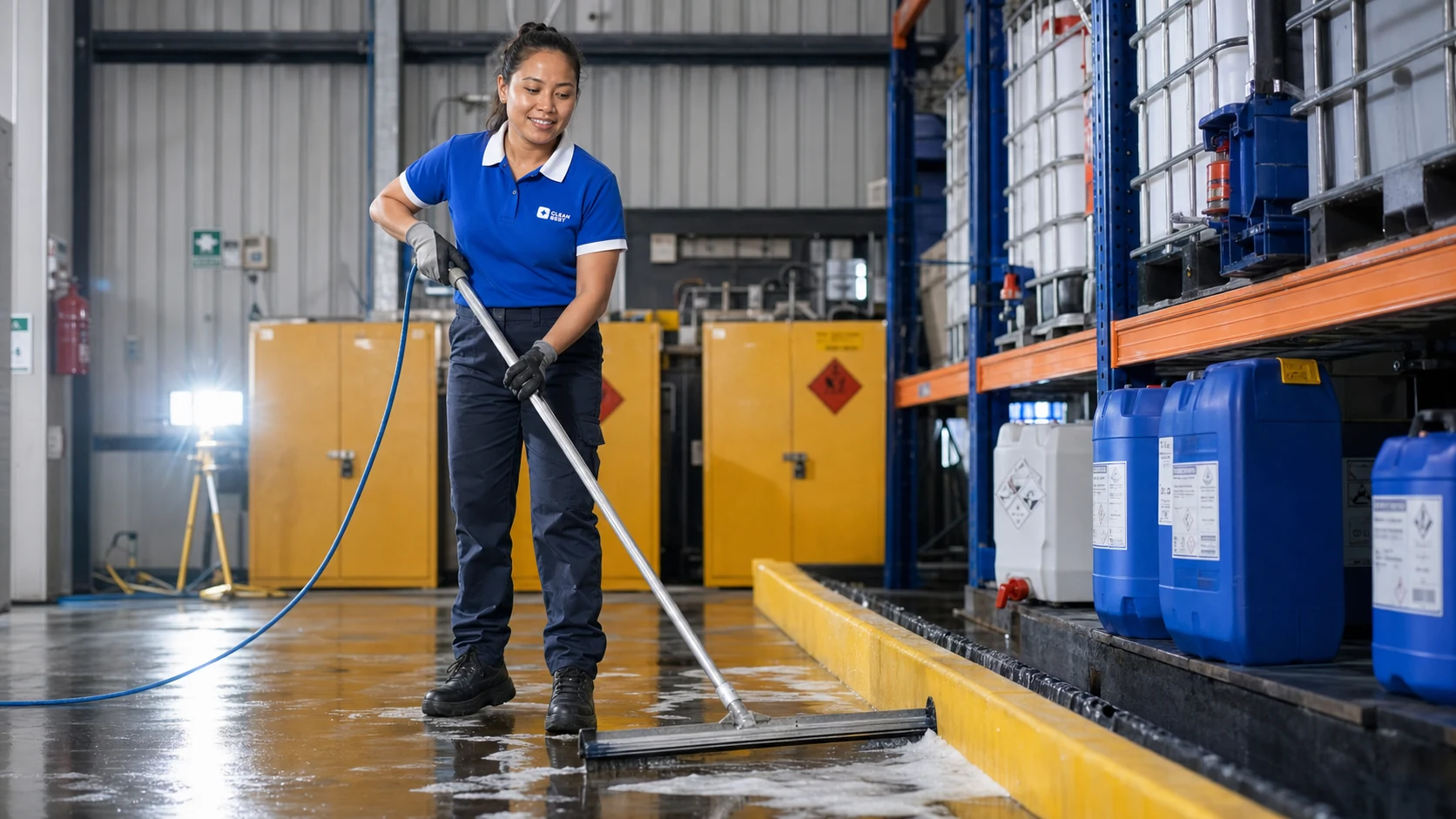 Warehouse Cleaning SydneyMachine scrubbing, racking dust and dock aprons handled between dispatch runs at Sydney distribution and storage sites.See how we scope warehouse cleaning
- Strata Cleaning SydneyLobbies, lifts, fire stairs, bin rooms and basement car parks, reported back to the committee or the strata manager in writing.See how we scope strata cleaning
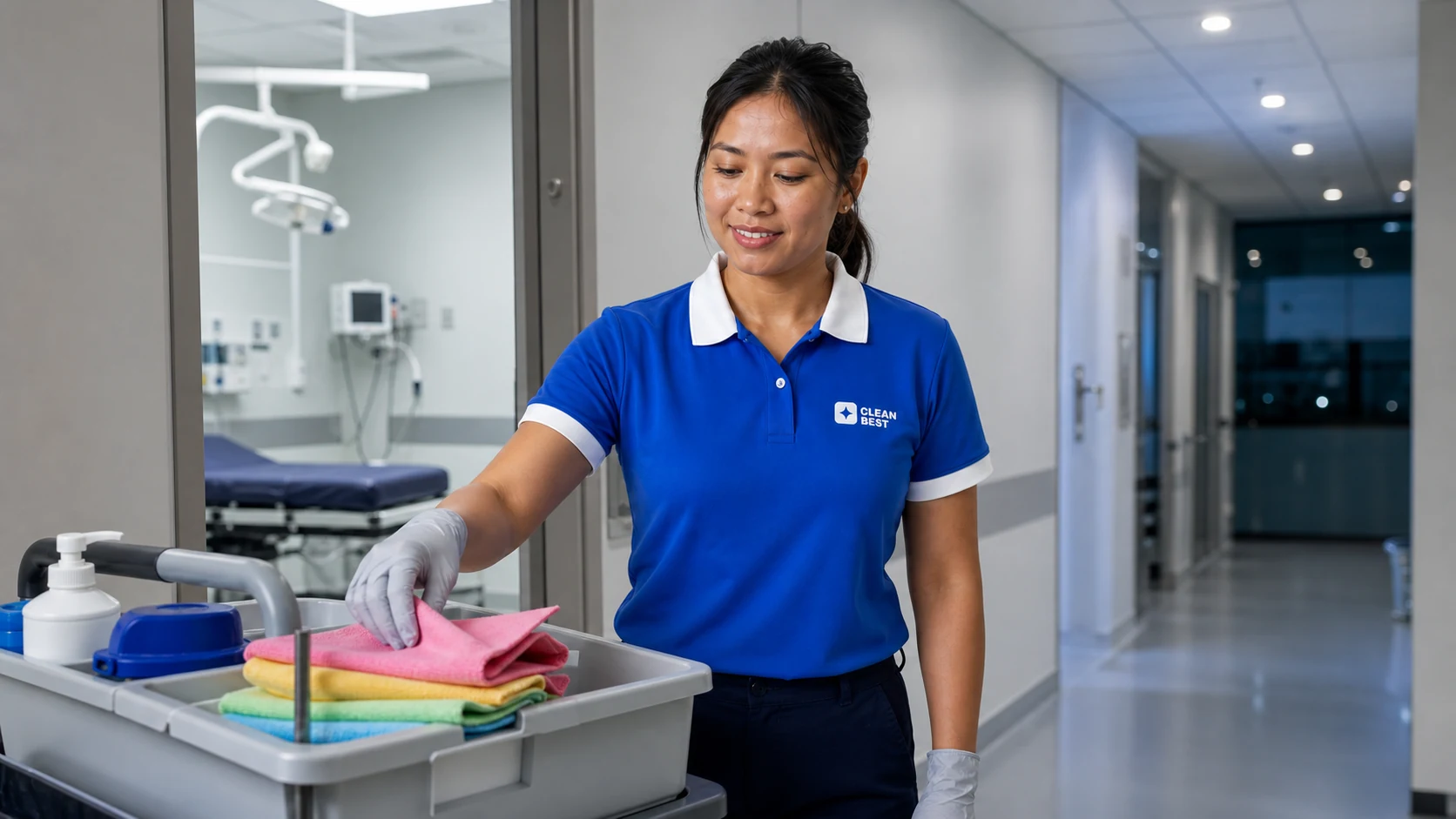 Medical Centre Cleaning SydneyColour-coded cloths, contact times observed and consult rooms cleaned to a written procedure for Sydney clinics and practices.See how we scope medical cleaning
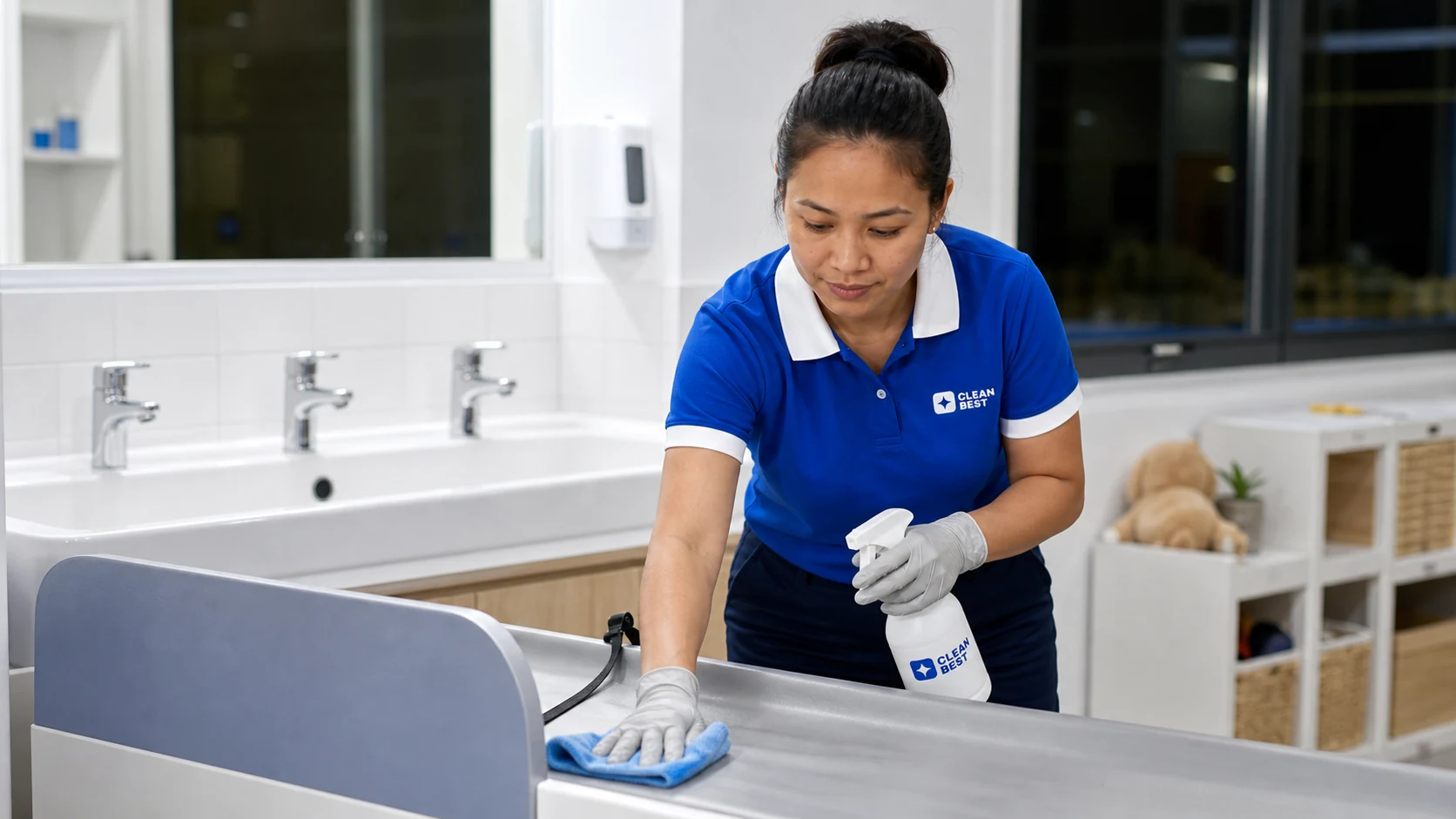 Childcare Cleaning SydneyOvernight rounds for Sydney early learning centres — cots, mats, toys, nappy-change benches and low-tox products throughout.See how we scope childcare cleaning
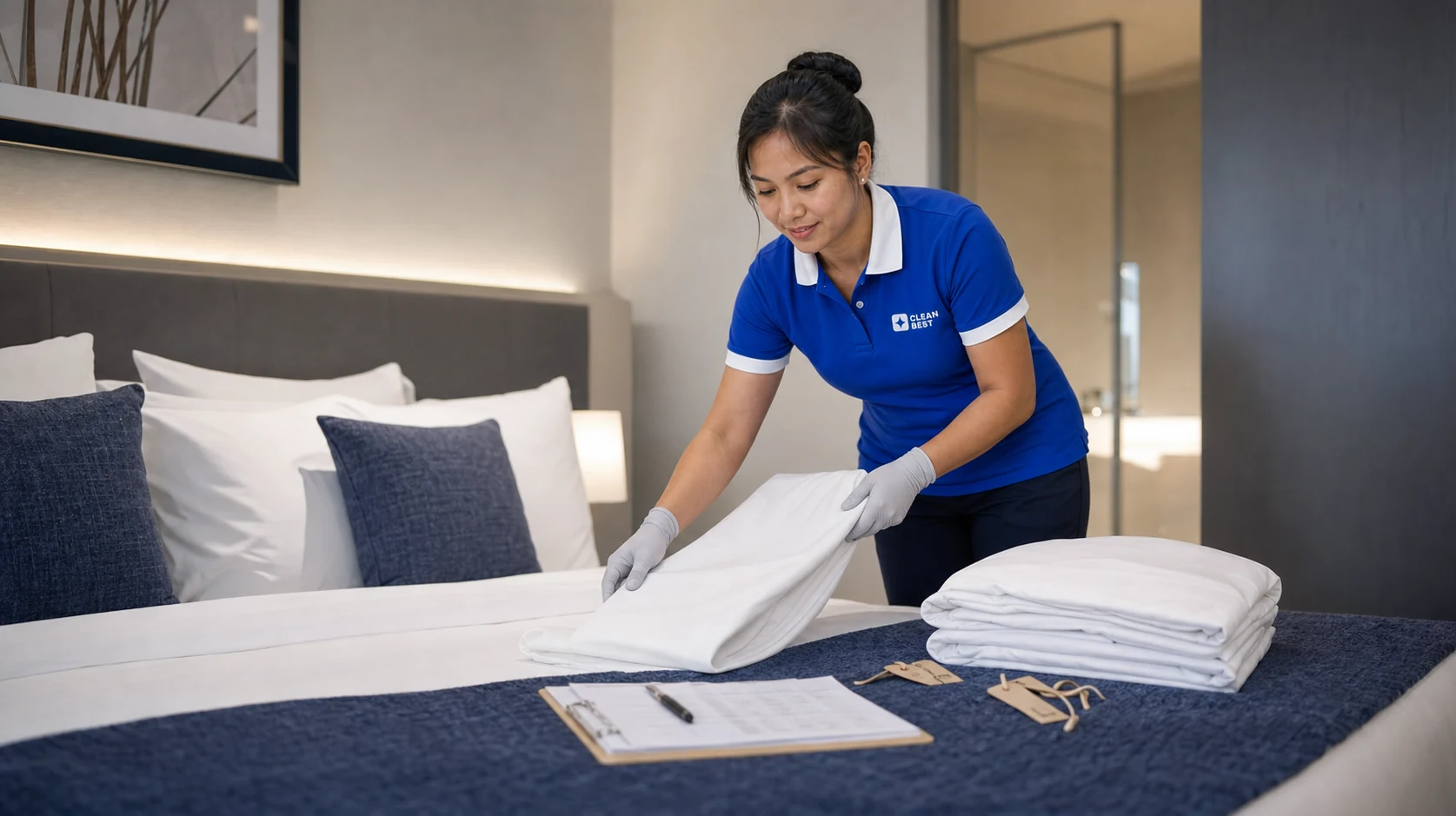 Home Cleaning SydneyThe same police-checked cleaner in your Sydney home every visit, working a room list you set rather than an hourly meter.See how we scope home cleaning
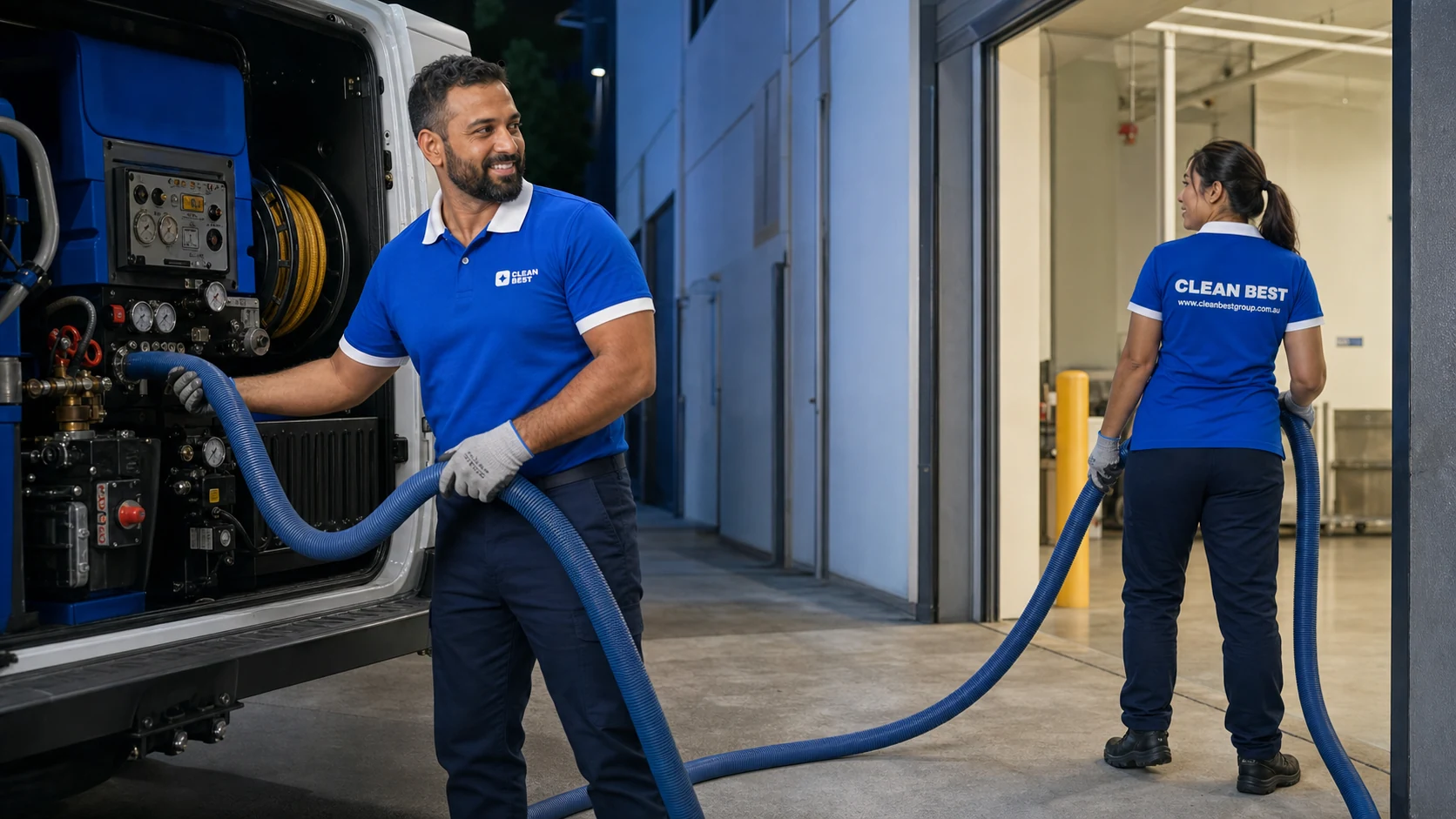 Carpet Cleaning SydneyHot-water extraction for Sydney offices and homes, run overnight so the pile is dry and walkable before anyone arrives.See how we scope carpet cleaning
 Gym Cleaning SydneyPre-dawn rounds for Sydney gyms and studios — touchpoints, rubber flooring, mirrors, showers and the drains under them.See how we scope gym cleaning
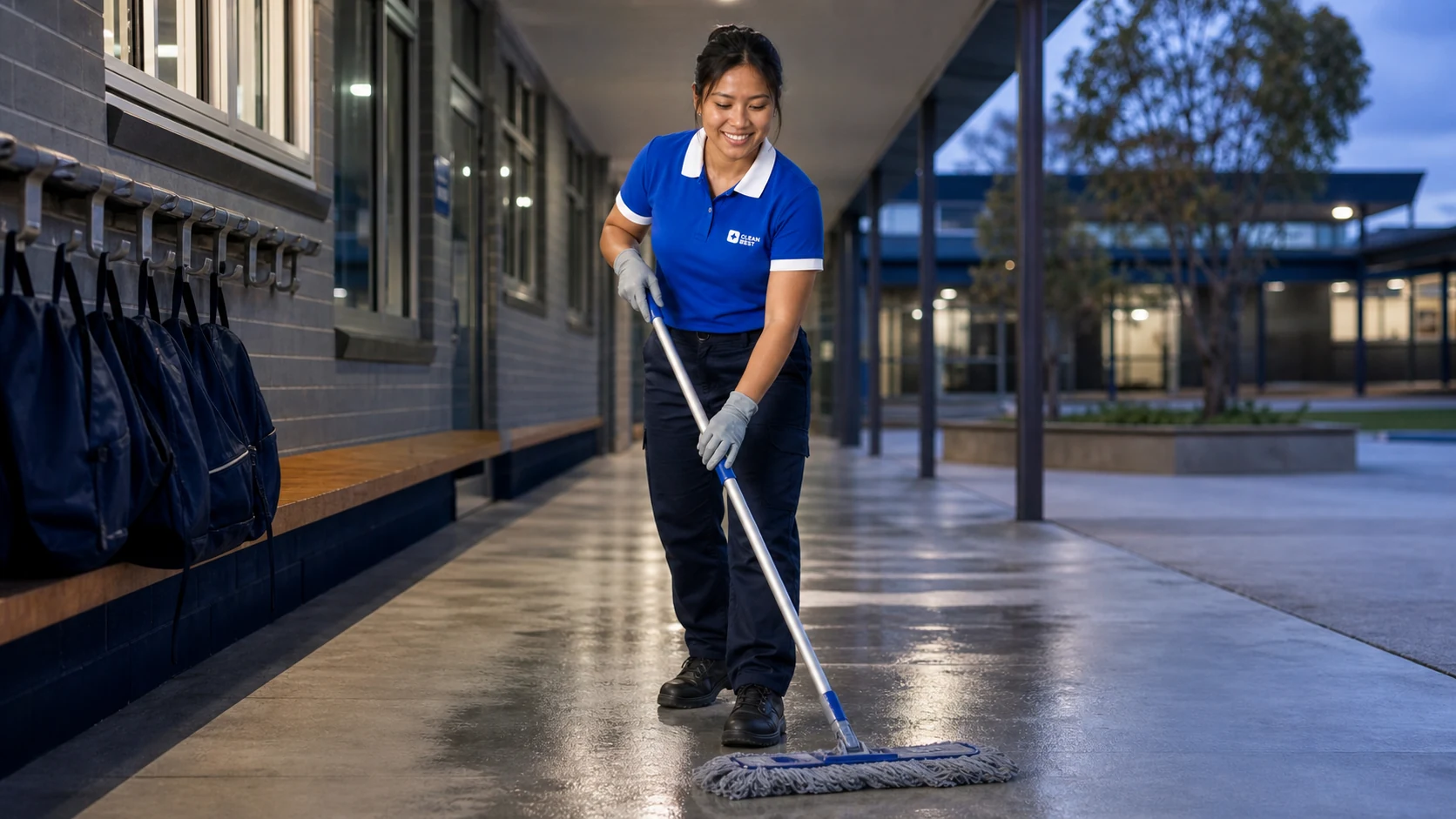 School Cleaning SydneyClassrooms, halls, canteens and amenities cleaned by WWCC-cleared cleaners around Sydney school timetables and term breaks.See how we scope school cleaning
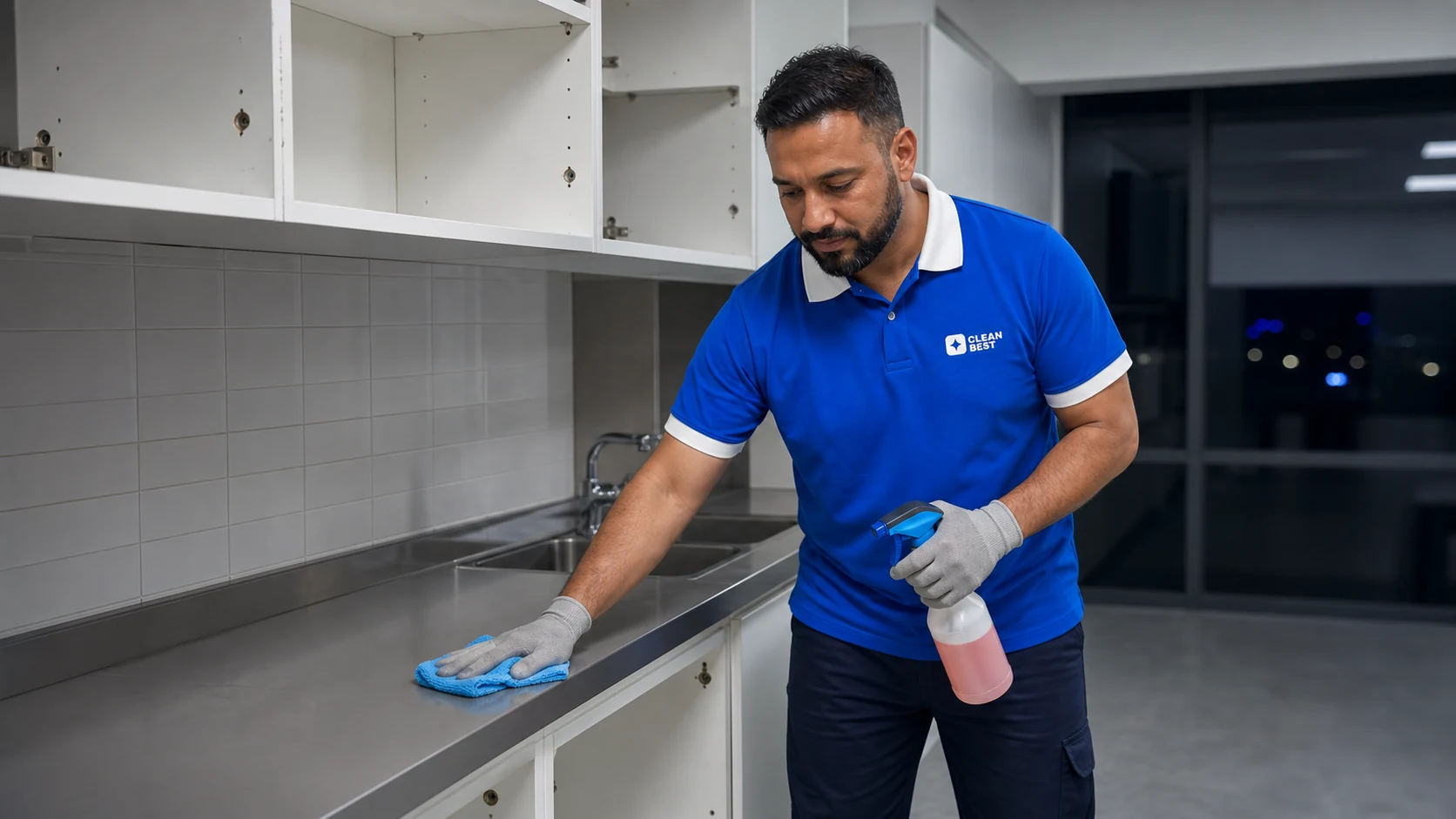 End of Lease Cleaning SydneyVacate cleaning for Sydney tenancies worked against the outgoing condition report, with a free return if the inspection finds something.See how we scope end of lease
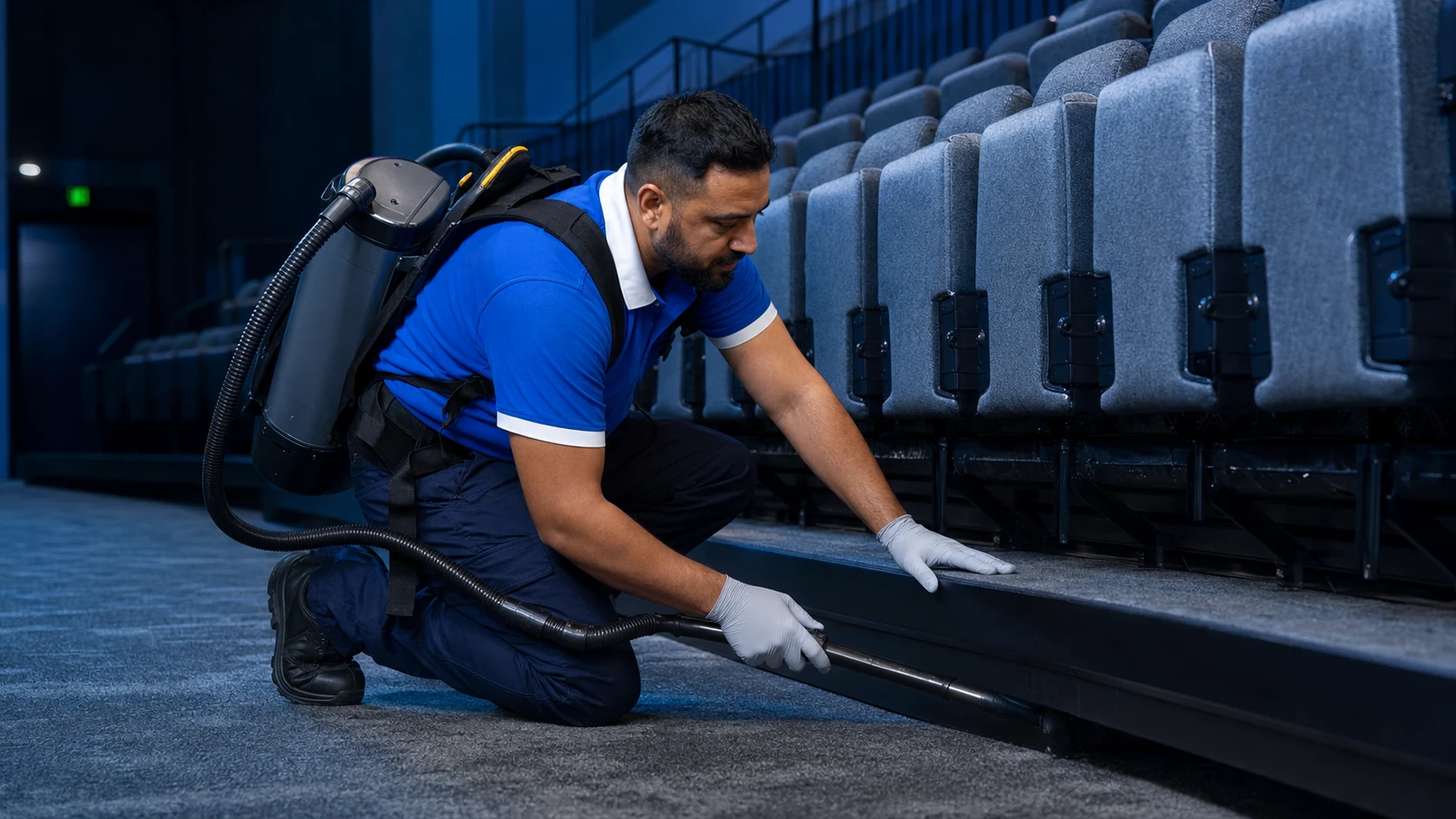 Church Cleaning SydneyQuiet, unobtrusive cleaning for Sydney churches and halls, scheduled between services and around funerals and weddings.See how we scope church cleaning
FAQ
The questions Sydney buyers ask us before they sign
Pricing, hours, subcontracting, access, audits and exit terms. Ask these of every contractor you are considering, not only of us.
Why do commercial cleaning Sydney quotes vary so much for the same building?
Clean Best has walked premises where the quotes in front of the client differed by more than half. Almost none of that gap is the hourly rate — it is the number of labour hours each contractor has assumed. One has priced a 90-minute visit and one has priced three hours, for the same task list, and neither has told you which. Ask every contractor how many hours per visit their price funds and how they arrived at that figure. The cheapest quote is usually the one with the fewest hours hidden inside it.
How can I tell if a cleaning quote is too cheap to be delivered?
Clean Best suggests you work backwards from the labour. A price has to fund award wages for the hours promised, plus superannuation, workers compensation, public liability cover, equipment, consumables, travel and supervision — before anyone makes a dollar. If a quote cannot cover that arithmetic for the hours its own task list implies, the hours will quietly shrink until it can. That is not a prediction about a dishonest contractor; it is simply what has to happen. Ask for the hours, then check whether the money can pay for them.
What should a commercial cleaning scope of works actually contain?
Clean Best writes every scope around six things: the areas by name, the task in each area, the frequency of each task, the method or product where it matters, who supplies consumables, and what is expressly excluded. A scope that says 'clean washrooms weekly' is unenforceable — clean how, to what standard, restocked by whom. A scope that says 'sanitise pans, urinals, basins and tapware, restock paper and soap from stock we supply, every visit' can be checked by anyone standing in the room.
Will my cleaner be an employee or a subcontractor?
Clean Best rosters the cleaner who services your site, and you are told who they are. Ask any contractor this directly, because a large share of commercial cleaning in Sydney is passed down a chain: the company you sign with sells the run to an operator, who may sell it again. Each step takes a margin out of the same fixed price, and the hours available for your premises fall at every step. You are still paying the original figure. Ask who physically holds the roster, and ask before you sign.
How does after-hours access work in a managed Sydney building?
Clean Best documents the access procedure before the first shift rather than discovering it on the night. In a managed Sydney building that usually means an after-hours pass or fob issued through building management, a signed induction held on file, a loading dock or goods lift booking for anything bulky, and an out-of-hours air-conditioning request if the work runs long. Some buildings also require a contractor's insurance certificate lodged with them, not just with you. Every one of those is a lead time, and a contractor who has not asked about them has not planned your first week.
What does a monthly cleaning audit actually prove?
Clean Best walks each site monthly against the written scope and sends you the result whether it is flattering or not. An audit is only worth something if three conditions hold: it is measured against a scope specific enough to fail, it is written down, and it reaches you rather than staying in the contractor's file. An audit that always passes is not an audit, it is a marketing document. Ask to see the format before you sign, and ask what happens on the page when something is found.
Should I sign a fixed-term commercial cleaning contract?
Clean Best does not ask you to. We work on a rolling agreement with 30 days notice on either side. A fixed term protects the contractor, not the client: once the signature is on the page the incentive to hold the standard in month nine drops sharply, and your only remedy is a dispute. If a contractor will only work on a long lock-in, ask them what they think would happen to their service if you could leave. Their answer is the most useful thing you will hear in the meeting.
What is the difference between periodic work and the regular clean?
Clean Best separates them in the quote, and you should insist that anyone does. The regular clean is what happens every visit — waste, amenities, floors, touchpoints. Periodic work is the infrequent, equipment-heavy work: carpet extraction, hard-floor stripping and sealing, high-level dusting, external glass. If periodic work is not costed and scheduled in the scope, it does not happen, and after two years the building looks it. Ask which periodic tasks are inside your price, and on what cycle.
Keep exploring
Where to go from here
The service pages carry the same detail applied to a specific premises type.
Find Clean Best Group in Seven Hills
Our Seven Hills base supports commercial cleaning across Sydney and NSW. Find our location, contact the Clean Best Group team or request a written quote.
Clean Best Group
54 Columbia Rd, Seven Hills NSW 2147, Australia
Clean Best Group
54 Columbia Rd, Seven Hills NSW 2147
Get commercial cleaning Sydney priced from the hours it actually takes
Free after-hours walkthrough. The written scope reaches you first and the fixed price second. No lock-in term. Call 02 5839 3012 / 0485 000 860.