
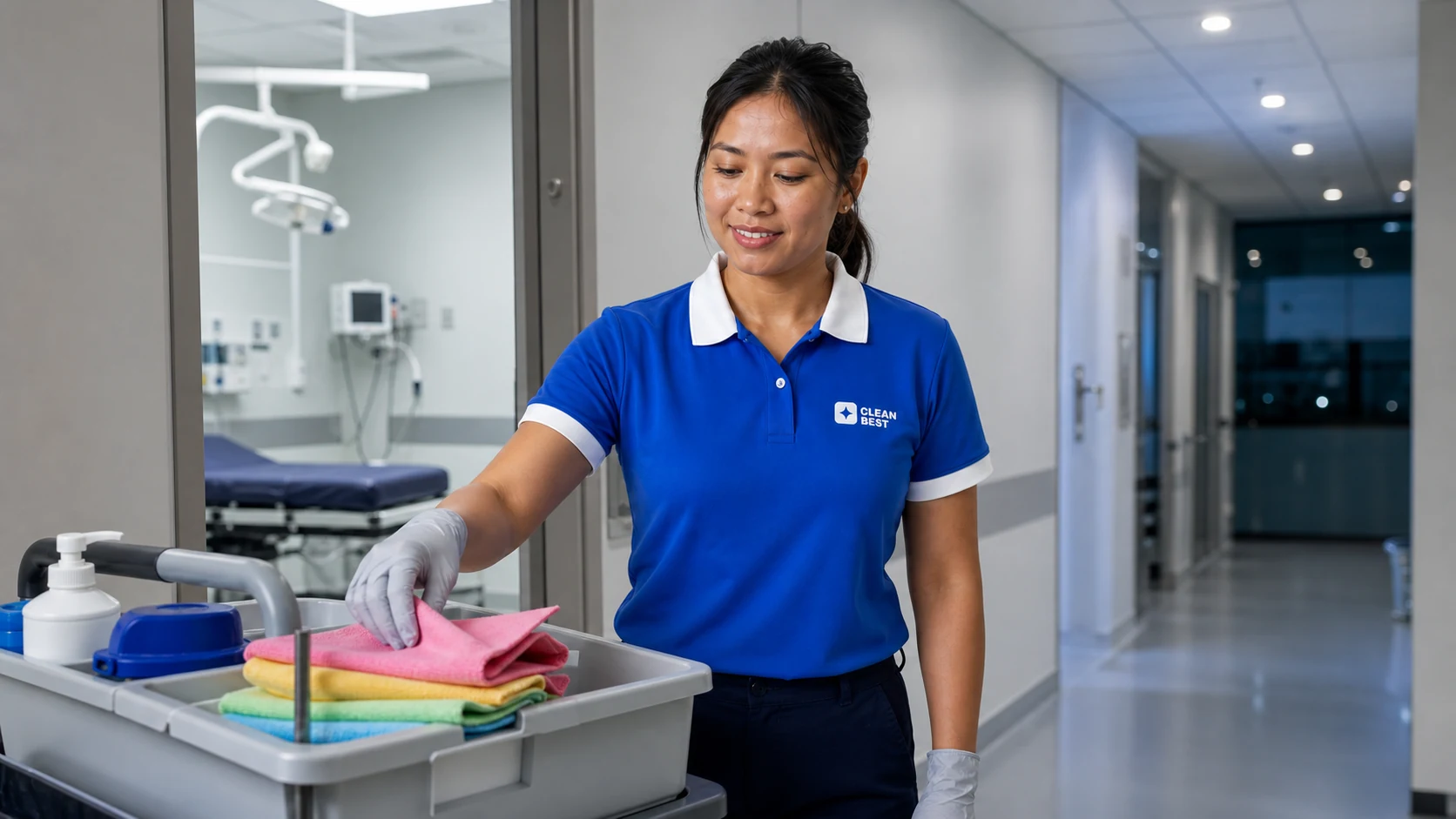
Medical centre cleaning
Medical Centre Cleaning Sydney
A procedure, not a round. Surfaces cleaned in a defined order, cloths and mop heads colour-coded so nothing travels between rooms, and disinfectant left for the contact time the label actually requires.
- A written procedure per room, not a generic method
- Colour-coded systems anyone can audit by looking
- Contact times observed, not sprayed and wiped straight off
- The clinical waste boundary stated plainly and respected
Ask us for the paperwork
Every claim on this card has a document behind it, and it reaches you before the first shift rather than after you chase it.
- $20m public liabilityCertificate of currency on request
- Police-checked cleanersWWCC-cleared for schools and childcare
- No lock-in agreementFixed written quote within 24 hours
How is a medical centre cleaned differently from an office?
Medical centre cleaning is performed to a written procedure rather than a task list. Surfaces are cleaned in a defined order so that contamination moves in one direction only; cloths and mop heads are colour-coded so that equipment used in a washroom cannot be used in a consulting room; and disinfectant is left on the surface for the contact time stated by the manufacturer, because disinfection is a time-based process and wiping a product off immediately cleans the surface without disinfecting it.
Clinical and sharps waste is a regulated stream handled by a licensed waste contractor, not by a general cleaning contractor. A cleaning scope should state that boundary explicitly, keep the general waste stream separate and correct, and require the cleaner to flag anything placed in the wrong bin.
Clean Best cleans medical centres, GP clinics, dental practices and allied health rooms across Sydney and has traded since 2015. Cleaners hold a current National Police Check before their first shift, safety data sheets are provided for every product used, and the business carries $20m public liability cover. Quotes are arranged on 02 5839 3012 / 0485 000 860.
- Trading since 2015Cleaning Sydney business premises
- Police-checked cleanersWWCC where the premises requires one
- $20m public liabilityCertificate of currency on request
- Written quote in 24 hoursFixed price, no lock-in agreement
The detail
Medical centre cleaning Sydney practices can put in front of an assessor
Medical centre cleaning Sydney practices need is not office cleaning done more carefully. It is a different activity with a different logic, and the difference is not how hard somebody scrubs — it is the sequence, the separation and the time. Get those three right and a clinic is genuinely clean. Get them wrong and it can be visibly spotless and still be moving contamination from the washroom to the consulting bench, invisibly, every night.
Sequence: contamination should only ever travel one way
Rooms are cleaned in an order, and within a room surfaces are cleaned in an order: cleaner areas before dirtier ones, higher surfaces before lower, finishing at the floor. It sounds obvious written down. It is almost never specified in a cleaning scope, and a cleaner who has not been told will reasonably start wherever seems most efficient — which is how a bench gets wiped after the bin has been handled.
Separation: colour coding is a control you can see
Cloths and mop heads are colour-coded so that equipment used in a washroom cannot reach a consulting room. The reason this system has become standard is not that it is clever, but that it is visible: a practice manager, a supervisor or an assessor can check compliance by looking, rather than by trusting an assurance. A microfibre system with no colour discipline is one cloth away from a problem that leaves no trace and that nobody will ever detect.
Time: the instruction almost everybody ignores
Disinfection is time-based. The label states a contact time — the period the surface must remain visibly wet for the disinfection claim to hold. Spray and immediately wipe, and you have cleaned the surface. You have not disinfected it. Both actions look identical from across the room, both leave the bench looking the same, and only one of them does what the practice thinks it has bought.
So the contact time goes into the written procedure, it is taught at induction, and it is one of the things the monthly audit checks. It is also, bluntly, the single easiest question with which to test any cleaning contractor pitching for a Sydney clinic: ask them what the contact time is on the product they intend to use, and watch what happens.
The rooms, one at a time
Consulting rooms: examination couch and its base, the paper roll holder, bench surfaces, the sink and tapware, the bin, door furniture, the chair the patient sat in, the equipment surfaces the practice tells us we may touch. Treatment and procedure rooms: the same, plus the surfaces around the clinical waste point and whatever additional steps the practice’s own protocol specifies.
Waiting rooms are a different problem entirely — they are the highest-traffic room in the building, full of people who are unwell, touching magazines, armrests, water coolers and children’s toys. Reception has a counter, a screen, a keyboard and an EFTPOS terminal, all touched by everyone. Washrooms are washrooms, and they matter more here than anywhere else.
The waste boundary, stated plainly
Clinical and sharps waste is regulated and belongs with your licensed waste contractor. We do not touch it, and any cleaning contractor that offers to is telling you something about how they read their obligations. What we do is keep the general waste stream separate and correct, clean around the clinical waste points, and flag anything that has been put in the wrong bin so the practice can deal with it properly. That boundary is written into the scope, not discovered later.
Documentation, supplied before it is chased
A practice that is accredited itself should not have to chase its cleaning contractor for paperwork. Police check clearance details for the cleaner rostered to your site. The certificate of currency for our $20m public liability cover. Safety data sheets for every product we bring onto the premises. The written procedure itself, which is a document your practice can produce rather than a promise it has to repeat.
Call 02 5839 3012 / 0485 000 860 and we will walk the practice after the last patient and write the procedure against the rooms you actually have.
Contact time
Spray and wipe cleans a surface. It does not disinfect it
Disinfection is a time-based process. The label states a contact time — the period the surface has to stay visibly wet for the manufacturer's claim to hold. Wipe the product off immediately and the surface is clean, not disinfected, and the two look exactly the same from anywhere in the room.
This is the most widely ignored instruction in commercial cleaning, and it is the reason a clinic can be visibly spotless and still not have had the thing it paid for. So it is written into the procedure, taught at induction, and checked at the monthly audit — and it is the single best question with which to test any contractor pitching for your practice.
- Contact time written into the procedure and taught individually
- Colour-coded cloths and mop heads, auditable by looking
- Cleaning sequence defined so contamination travels one way
- Safety data sheets supplied for every product on the premises
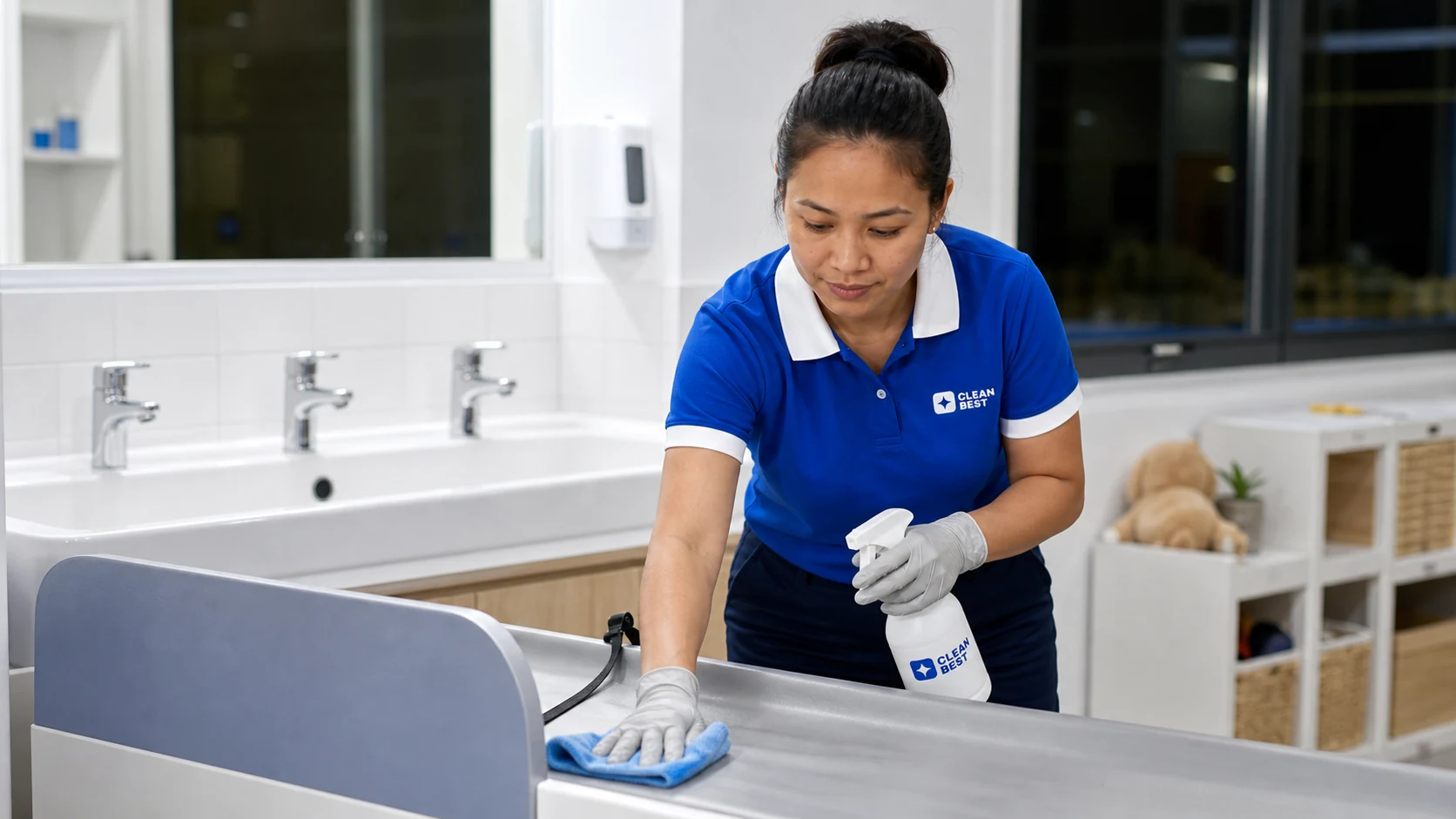
What's included
What we clean in a Sydney medical centre
Written as a procedure with an order to it. Yours is written against the rooms your practice actually has.
- Consulting rooms — examination couch and base, paper roll holder, bench surfaces, sink and tapware
- Treatment and procedure rooms cleaned to the practice's own protocol, in the stated order
- Touchpoints disinfected with the product's contact time observed on every surface
- Colour-coded cloths and mop heads used throughout, with no equipment crossing between room types
- Waiting room — seating and armrests, water cooler, toys, magazine rack, children's area
- Reception — counter, screen, keyboard, phone, EFTPOS terminal and the patient side of the desk
- Washrooms sanitised; paper, soap and hand towel restocked from the stock named in the scope
- Hand hygiene stations checked and flagged when running low, before they are empty
- Hard floors cleaned with the correct chemistry for the surface, in the correct sequence
- General waste emptied and the stream kept separate and correct
- Areas around clinical waste points cleaned; anything in the wrong bin flagged to the practice
- Staff room, kitchen and lockers cleaned on their own round
- Internal glazing, door furniture and light switches cleared and disinfected
- Premises secured on exit — lights, doors, alarm, entry and exit logged
Excluded: clinical and sharps waste, which is a regulated stream handled by your licensed waste contractor; sterilisation equipment; and any instrument or device the practice has not expressly asked us to clean.
Pricing
Medical centre cleaning quotes, built from the rooms and what happens in them
Priced from room count, discipline, patient flow and the procedure the practice needs to be able to evidence. The figure is fixed in writing before the first visit.
Single practice
A GP, dental, allied health or specialist practice with a waiting room, reception, a few consulting rooms and a staff area.
- Consulting rooms cleaned to a written procedure, in a defined order
- Colour-coded cloths and mop heads, checkable by looking
- Contact times observed on touchpoints, not sprayed and wiped
- Cleaned after the last patient, so rooms stay available all day
Fixed price, in writing, before the first visit.
Medical centre
A multi-practitioner centre with treatment rooms, a procedure room, pathology, multiple washrooms and steady patient flow.
- Room-by-room procedure written into the scope, not assumed
- Optional midday reset for the waiting room and washrooms
- Clinical waste boundary stated plainly and respected
- Named supervisor and a written monthly audit against the scope
Fixed price, in writing, before the first visit.
Multi-site health
Several clinics across Sydney under one practice management or health services group.
- One written procedure per site, one supervisor across all of them
- Consistent documentation the group can produce at accreditation
- Periodic programs sequenced clinic by clinic
- One consolidated invoice across every location
Fixed price, in writing, before the first visit.
Free walkthrough, then a written scope and a fixed price within 24 hours.
How it works
How a medical centre clean starts
Four steps. The walkthrough happens after the last patient, which is also when we would be working.
- 1
Tell us about the practice
Call 02 5839 3012 with the room count, the disciplines practised, your hours and the waste arrangement you already have in place.
- 2
We walk it after last patient
Room by room with the practice manager, so the procedure is written against the rooms that exist rather than a template of rooms that do not.
- 3
A written procedure, then a price
Order of work, colour coding, contact times, and the boundary around clinical waste. All of it on paper. The fixed figure comes after.
- 4
Induct and start
Cleaners inducted on your specific procedure and products, police-checked before the first shift, audited monthly against the scope.
FAQ
Medical cleaning questions from Sydney practice managers
Procedure, contact times, colour coding, clinical waste, hours and screening.
What makes medical centre cleaning different from office cleaning?
Clean Best treats a medical centre as a procedure rather than a round. The difference is not effort, it is method: surfaces are cleaned in a defined order so that contamination moves one way, cloths and mop heads are colour-coded so a bathroom cloth never reaches a consulting room, and disinfectant is left for its stated contact time rather than sprayed and wiped straight off. An office clean done conscientiously is still not a clinical clean, because the sequence and the separation are the whole point.
What is a disinfectant contact time and why does it matter?
Clean Best observes the contact time printed on the product, and it is the most commonly ignored instruction in commercial cleaning. Disinfection is a time-based process: the surface has to stay visibly wet for the period the manufacturer states for the label claim to hold. Spray it on, wipe it straight off, and you have cleaned the surface without disinfecting it. From three metres away the two actions look identical, which is exactly why it is written into the scope and taught at induction.
Why colour-code cloths and mop heads?
Clean Best colour-codes so that a cloth used in a washroom can never be used on a consulting room bench, and so that anyone can check compliance by looking rather than by trusting. It is a control that works precisely because it is visible: a supervisor, a practice manager or an auditor can see at a glance whether the system is being followed. A microfibre system with no colour discipline is one cloth away from moving contamination between rooms, quietly and invisibly.
Do you handle clinical waste?
Clean Best does not handle clinical or sharps waste, and no general cleaning contractor should tell you otherwise. That stream is regulated and belongs with your licensed waste contractor. What we do is keep the general waste stream separate and correct, clean the areas around the clinical waste points, and flag anything that has been placed in the wrong bin so the practice can deal with it. The boundary is written into the scope and stated at the walkthrough.
When can a Sydney medical centre be cleaned?
Clean Best cleans most Sydney clinics after the last patient leaves, which keeps consulting rooms available all day and avoids working around people who are unwell. Practices with long or split hours sometimes prefer an early-morning round before first appointments, and busy centres often add a light midday reset for the waiting room and washrooms. The scope states which rooms get which round, because a waiting room and a treatment room are not the same problem.
Are your cleaners screened for a medical environment?
Clean Best requires a current National Police Check from every cleaner before their first shift, and cleaners are inducted on your practice's specific procedures rather than a generic method. We supply the clearance details, the certificate of currency for our $20m public liability cover, and safety data sheets for every product used on the premises. A practice that is accredited itself should not have to chase its cleaning contractor for paperwork.
Keep exploring
Related work for health and care premises
The same discipline, applied where somebody else is also inspecting the standard.
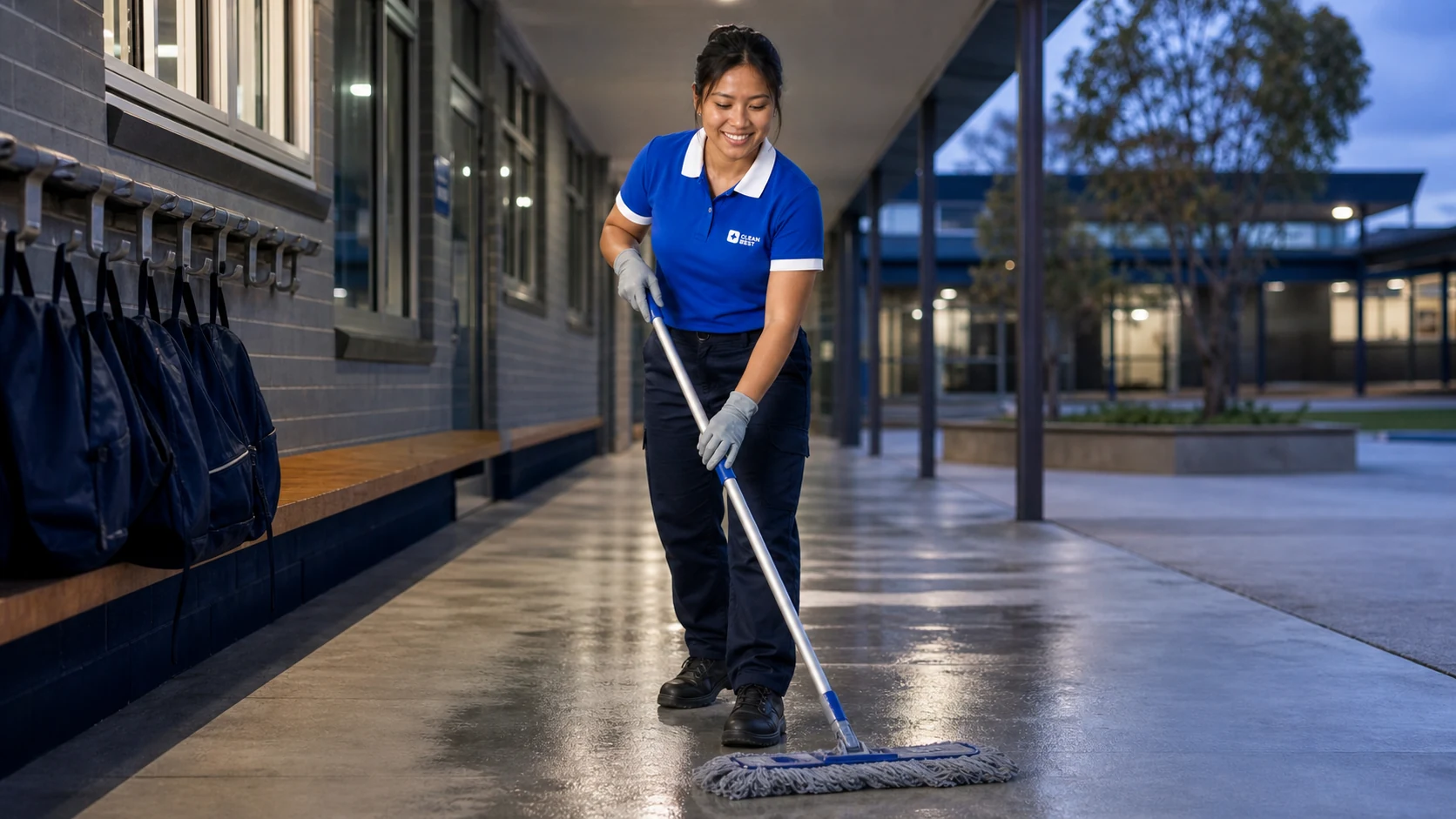
Get medical centre cleaning Sydney practices can evidence, not just describe
Free walkthrough after the last patient. A written procedure per room, then the fixed price. Call 02 5839 3012 / 0485 000 860.