
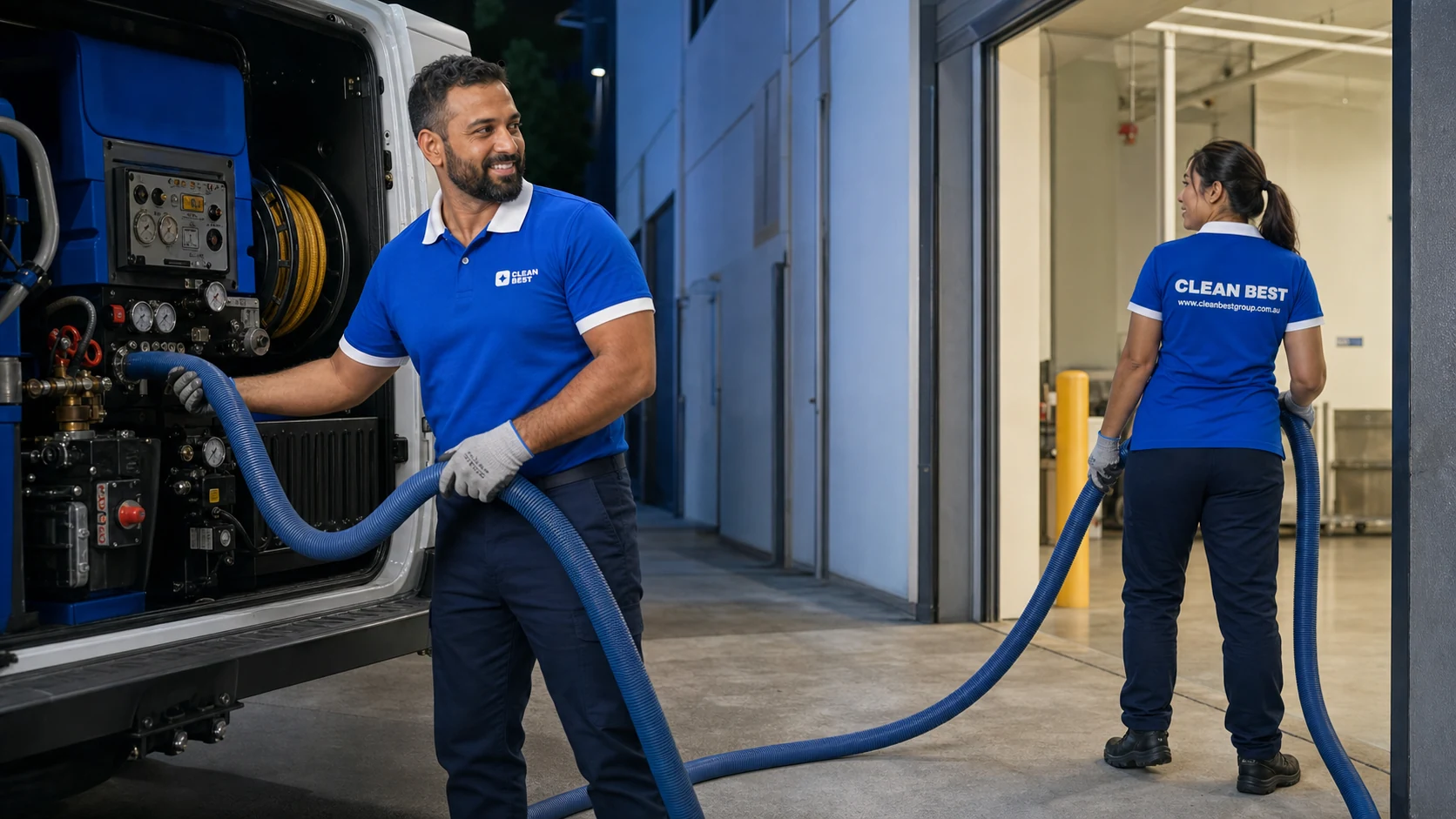
Carpet cleaning
Carpet Cleaning Sydney
Hot-water extraction with the part that actually matters done properly: full recovery, a proper rinse, no detergent residue left in the pile, and air movers so the carpet is dry and walkable before anyone needs it.
- Recovery, not just application — a wet carpet is a failed clean
- Residue-free rinse, so it does not re-soil in a fortnight
- Run overnight with air movers, dry before your first arrival
- An honest call on what will lift and what is permanent, before we start
Ask us for the paperwork
Every claim on this card has a document behind it, and it reaches you before the first shift rather than after you chase it.
- $20m public liabilityCertificate of currency on request
- Police-checked cleanersWWCC-cleared for schools and childcare
- No lock-in agreementFixed written quote within 24 hours
What is hot-water extraction carpet cleaning?
Hot-water extraction is the method most people refer to as steam cleaning, although no steam is involved. Heated cleaning solution is injected into the carpet pile under pressure and is immediately recovered by vacuum, carrying the suspended soil out with it. The quality of the result depends far more on the recovery than on the application: a carpet left wet will dry slowly, may wick old contamination back to the surface, and will re-soil quickly.
Detergent residue is the most common cause of carpet re-soiling shortly after a clean. Cleaning solution left in the pile because it was not properly rinsed and recovered remains as a film that attracts and holds soil faster than clean fibre does, so the carpet looks excellent briefly and then deteriorates faster than before. Wicking — an old stain reappearing after drying — is caused by over-wetting, where moisture in the backing or underlay rises back through the pile as it dries.
Clean Best performs hot-water extraction carpet cleaning across Sydney for commercial and residential premises and has traded since 2015. Commercial work is run overnight with forced drying so the pile is dry before staff arrive. Quotes are arranged on 02 5839 3012 / 0485 000 860.
- Trading since 2015Cleaning Sydney business premises
- Police-checked cleanersWWCC where the premises requires one
- $20m public liabilityCertificate of currency on request
- Written quote in 24 hoursFixed price, no lock-in agreement
The detail
Carpet cleaning Sydney floors recover from, rather than merely survive
Carpet cleaning Sydney buyers get is usually judged on the day and regretted a fortnight later. The carpet looks superb when the machine leaves. Three weeks on it looks worse than it did before anyone touched it, and nobody can explain why. There is an explanation, it is not mysterious, and almost nobody in this trade will tell you what it is.
The residue problem, which is the whole problem
Cleaning solution has to come back out of the carpet. If it does not — if the machine lays it in beautifully and recovers it poorly, or if the rinse is skipped to save time — then detergent stays behind in the pile as a sticky film. That film is superb at attracting and holding soil. Far better at it, in fact, than clean carpet fibre.
So the carpet looks magnificent for a fortnight and then re-soils rapidly, and the client concludes the carpet is simply old. It is not. It is coated in detergent. The fix costs the contractor time on the day and nothing else, which is precisely why it is the first thing dropped when a job has been priced too cheaply.
Wicking, and why more water is never the answer
Wicking is what happens when an old spill has soaked through to the backing or the underlay. As the carpet dries, moisture rises back through the pile and carries that old contamination up to the surface with it — so a stain you successfully removed on Tuesday reappears on Wednesday, looking exactly as it did before.
It is triggered by over-wetting, which means the instinctive response to a stubborn stain — more water, more solution, more passes — is the response most likely to cause it. The correct approach is restraint, proper recovery and controlled drying. A contractor who responds to a difficult stain by flooding it has told you they do not understand what they are looking at.
Drying is a plan, not a hope
For a commercial floor, the entire logic of cleaning carpet overnight is that it will be dry by morning. That does not happen by itself. It requires the solution to have been genuinely recovered, and it requires air movement — air movers placed and moved through the space, not one fan pointed at a corner.
If a contractor cannot tell you how they will get your floor dry before opening, they are planning to hand you a damp carpet and a Monday morning that is now your problem rather than theirs. Ask the question directly. It is a fair one.
What will lift, and what is damage rather than dirt
Traffic-lane soiling almost always improves markedly, and often dramatically. Many stains lift entirely. Some improve and do not disappear. And some are not soiling at all — the dye has been stripped out of the fibre, or the fibre itself has been altered by heat or a solvent, and what you are looking at is permanent damage that no amount of extraction will reverse.
We inspect and we tell you which is which before we start, because a client who was told the truth on Monday is not disappointed on Friday. If a carpet is genuinely beyond what extraction can do, we will say so and we will not take the job. Taking money for a result we know is not coming is not a business we want.
Put it on a cycle, not a phone call
Commercial carpet bought reactively — cleaned when it looks bad — is carpet that has already been damaged. Regular vacuuming lifts dry soil, but the fine grit that abrades the fibre and the oils that bind it into the pile need extraction, and the longer that is left the less of the original carpet comes back.
So it goes into the scope with a stated cycle, with traffic lanes and entry zones on a tighter one than the open floor, and with spotting between extractions included in the regular round. Call 02 5839 3012 / 0485 000 860 and we will inspect the carpet and tell you honestly what it has left in it.
Residue
Why the carpet looks superb for a fortnight and then worse than before
Detergent that is not fully rinsed and recovered stays in the pile as a sticky film, and that film attracts and holds soil far more effectively than clean fibre does. The carpet looks magnificent on the day and re-soils faster than it did before anyone touched it.
The client concludes the carpet is old. It is not — it is coated. Full recovery and a proper rinse cost the contractor time on the day and nothing else, which is exactly why they are the first things dropped when a carpet job has been priced too cheaply to be delivered.
- Full solution recovery, not application alone
- Residue-free rinse so the pile does not re-soil in a fortnight
- Controlled moisture to prevent wicking from the backing
- Air movers placed and moved, so the floor is dry before it is needed
What's included
What a Clean Best carpet clean involves
The steps that decide the result — most of which are invisible on the day and all of which show up six weeks later.
- Pre-inspection of fibre, backing, existing damage and the specific stains you are worried about
- An honest call, before we start, on what will lift, what will improve and what is permanent
- Furniture moved where it is safe and practical to do so, and returned afterwards
- Thorough dry vacuuming first, because extraction is not a substitute for it
- Pre-spray and dwell time on traffic lanes and heavily soiled areas
- Spot treatment matched to the stain type rather than one product for everything
- Hot-water extraction with full solution recovery, not a wet pass and a hopeful exit
- Proper rinse so no detergent residue is left in the pile to re-attract soil
- Moisture controlled deliberately, to avoid wicking old contamination up from the backing
- Air movers placed and repositioned through the space, not a single fan in a corner
- Edges, corners and under-desk areas done, not only the open floor
- Grooming of the pile where the carpet type calls for it
- A walk of the finished area with you, or a written note if the work was overnight
- Honest report on any area that did not come up as hoped, rather than silence
Excluded: carpet repair and re-stretching, colour restoration, flood and water-damage restoration, and any carpet we have assessed as beyond what extraction can achieve — we will tell you rather than take the job.
Pricing
Carpet cleaning quotes, built from the floor in front of us
Priced from area, fibre, traffic, the furniture that has to move and the state of what is actually there. Fixed in writing before we start, and not revised afterwards.
One-off clean
A single job — an office before a client visit, a home before a sale, a tenancy at the end of a lease.
- Hot-water extraction with full recovery, not a wet pass
- Pre-inspection, with an honest call on what will and will not lift
- Air movers so the pile is dry before it is needed
- Fixed price agreed before we start, not adjusted afterwards
Fixed price, in writing, before the first visit.
Periodic program
Commercial carpet on a stated cycle, written into a cleaning scope rather than bought reactively when it looks bad.
- A cycle written into your scope, not an occasional phone call
- Run overnight so the floor is dry and walkable before staff arrive
- Traffic lanes and entry zones treated on a tighter cycle than the rest
- Spotting between extractions included in the regular round
Fixed price, in writing, before the first visit.
Portfolio program
Multiple Sydney sites needing carpet work sequenced so the plant is where it needs to be.
- Sites sequenced across the year rather than all booked in one month
- One supervisor and one site register across the portfolio
- Reported against the scope like any other periodic program
- One consolidated invoice per period
Fixed price, in writing, before the first visit.
Free walkthrough, then a written scope and a fixed price within 24 hours.
How it works
How a carpet job runs
Four steps, and the second one is where the honesty happens.
- 1
Tell us about the carpet
Call 02 5839 3012 with the area, the fibre if you know it, the traffic level, and any spill or stain you want us to look at specifically.
- 2
We inspect before we quote
We check fibre, backing, existing damage and the stains, and we tell you which will lift, which will improve and which are permanent.
- 3
Fixed price, honest expectations
The price in writing and a plain statement of the result to expect. If a carpet is beyond what extraction can do, we say so and do not take the job.
- 4
Overnight, dry by morning
Extraction run after hours with air movers, so the pile is dry and walkable before your first person arrives.
FAQ
Carpet cleaning questions from Sydney clients
Method, residue, drying, wicking, stains and how often commercial carpet needs extraction.
What is hot-water extraction, and is it the same as steam cleaning?
Clean Best uses hot-water extraction, which is what most people mean when they say steam cleaning even though no steam is involved. Heated solution is injected into the pile under pressure and recovered immediately by vacuum, taking the suspended soil with it. The distinction that matters is the recovery: a machine that lays solution well but recovers it poorly leaves the carpet wet, and a carpet that stays wet is a carpet that will wick, smell and re-soil quickly.
Why does carpet look clean and then go dirty again within weeks?
Clean Best sees this constantly and the cause is almost always residue. Detergent left in the pile because it was not properly rinsed and recovered stays behind as a sticky film, and that film attracts and holds soil far faster than clean fibre does. The carpet looks superb for a fortnight and then re-soils faster than it did before it was cleaned. A proper rinse and full recovery is the difference, and it is invisible on the day.
How long does office carpet take to dry?
Clean Best runs commercial carpet work overnight with air movers so the pile is dry and walkable before staff arrive, which is the entire point of doing it after hours. Drying time depends on the pile, the humidity and how much solution was left in the carpet — which is why recovery matters so much. If a contractor cannot tell you how they will get the carpet dry before opening, they are planning to hand you a wet floor and a Monday morning problem.
What is wicking, and how is it prevented?
Clean Best prevents wicking by controlling moisture and drying properly, and it is worth knowing about because it is what makes an old stain reappear a day after a successful clean. Wicking happens when a spill has soaked through to the backing or the underlay: as the carpet dries, moisture rises back to the surface and carries the old contamination with it. Over-wetting the carpet is what triggers it, so the fix is restraint and recovery, not more water.
Can old traffic lanes and stains actually be removed?
Clean Best will tell you honestly what a carpet can and cannot recover, which is not what every contractor does. Traffic-lane soiling usually improves markedly. Some stains lift entirely, some improve, and some are permanent damage rather than soiling — dye has been removed or the fibre has been altered, and no amount of extraction brings that back. We say which is which before we start rather than after, so nobody is disappointed by a result we could have predicted.
How often should commercial carpet be extracted?
Clean Best puts commercial carpet extraction on a stated cycle in the scope rather than leaving it as an occasional purchase, because carpet cleaned reactively is carpet that has already been damaged. Regular vacuuming removes dry soil, but the fine grit that abrades the fibre and the oils that bind it need extraction. The right cycle depends on traffic and entry conditions, and it is one of the questions we answer at the walkthrough rather than by rule of thumb.
Keep exploring
Where carpet work usually sits
Most carpet extraction is a periodic program inside a larger cleaning scope.
Get carpet cleaning Sydney floors still look good after six weeks
Free inspection and an honest call on what will lift. Full recovery, residue-free rinse, dry before you need it. Call 02 5839 3012 / 0485 000 860.